






Percutaneous coronary intervention (PCI) with drug coated balloons (DCB) is a viable alternative, especially in patients at high risk of bleeding, side-branch lesions in coronary bifurcation, or in small coronary segments. De novo heart disease treated with DCB has been shown non-inferior to conventional DES stenting, according to the PICCOLETO-II trial.
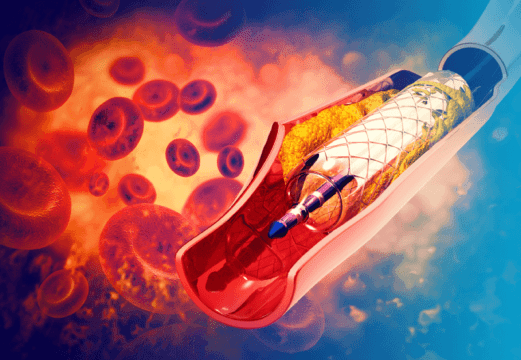
However, these interventions are not free from complications. One of the main associated risks are iatrogenic coronary dissections which continue to pose a challenge, despite showing a good rate of mid-term spontaneous healing. OCT (optimal coherence tomography) in addition to offering high resolution imaging, allows the assessment of angiographically non-observable complications, such as small dissections, which might provide additional information for event prediction when choosing a stent free therapy, with DCB.
The aim of this study, presented by Lee T, et al. was to look into the factors associated to clinical events in patients with de novo coronary lesions treated with DCB. This was a retrospective observational study in a center in Tokyo, Japan. The DCB used was SeQuent Please (paclitaxel coated balloon), and for OCT they used the Dragonfly OPTIS, Opstar OCT or Gentuity Vis-Rx catheters. Given a flow limiting dissection or a D-F dissection type (NHLBI classification), DES stenting was recommended, resulting in study exclusion. Primary end point included target lesion failure (TLF), defined as a composite of treated vessel related cardiac death, non-fatal MI and new target lesion revascularization (TLR).
Read also: Cardioband in Tricuspid Valve Regurgitation.
It included 328 patients with 328 de novo lesions treated with DCB. 75 of these patients presented acute coronary syndrome (ACS), which required PCI with DCB in ACS. Followup was mean 460 days (IQR 286-770), and TLF was observed in 9,5% of cases. These events included 1,2% cardiac mortality, 3,7% non-fatal AMI and 7,6% TLR.
Patient mean age was 72, 81% were men and 77% presented chromic coronary syndrome. As regards baseline characteristics, there was a significant difference between patients with TLF and those without when it came to chronic kidney failure requiring hemodialysis.
Angiographically, there was more calcification in patients with TLF, with no significant differences as regards angiographically visible dissections. However, at OCT assessment, there was calcified plaque (calcification grade) more frequently in the TLF group (215° [IQR 109-349] vs 104° [IQR 0-253]; p=0.007) and calcified nodules (23% vs 10%; p=0.07). As regards post PCI findings, lesions with medial compromise (mild) were less common in the group with TLF (16% vs 61% without TLF). When characterizing dissections, ≥60° dissection angle was present in 97.3% of cases, with lesions longer than 2mm in 82.9%. However, this difference was not associated to TLF, both groups presenting similar post PCI minimal luminal area, with and without events.
Read also: 2 Year Outcomes of Transcatheter Mitral Valve Replacement with Intrepid.
At multivariable analysis, the presence of hemodialysis, a calcium angle larger than the maximum and absence of medial dissection were independent predictors of TLF. The smaller chance of TLF events was observed at OCT of patients presenting medial dissection and a calcium arch ≤ 180°.
Conclusions
In this cohort of patients from a Japanese center, treated with DCB-PCI, assessed by OCT, there was 9,5% of TLF events, mainly associated to hemodialysis, calcified lesions and dissection compromise farther than median.

Dr. Omar Tupayachi.
Member of the Editorial Board of SOLACI.org.
Original Title: Predictors of target lesion failure after percutaneous coronary intervention with a drug-coated balloon for de novo lesions.
Reference: Lee T, Ashikaga T, Nozato T, Nagata Y, Kaneko M, Miyazaki R, Misawa T, Taomoto Y, Okata S, Nagase M, Horie T, Terui M, Kachi D, Odanaka Y, Matsuda K, Naito M, Koido A, Yonetsu T, Sasano T. Predictors of target lesion failure after percutaneous coronary intervention with a drug-coated balloon for de novo lesions. EuroIntervention. 2024 Jul 1;20(13):e818-e825. doi: 10.4244/EIJ-D-23-01006. PMID: 38949242; PMCID: PMC11200664.
Subscribe to our weekly newsletter
Get the latest scientific articles on interventional cardiology



