






TAVR indication is steadily advancing onto younger, lower risk patients.
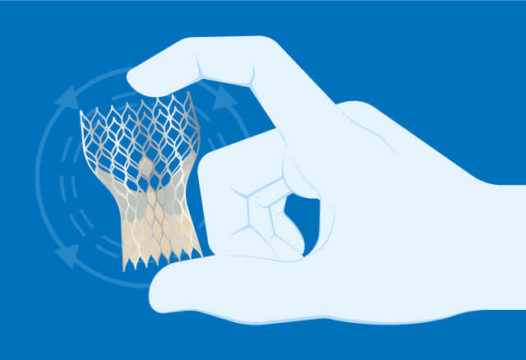
The presence of bicuspid aortic valves (BAV) has been observed in 0.5% to 2% of echocardiograms and autopsies. We know this is a challenging anatomy for TAVR, because of greater calcification, which has been associated to increased complications and even higher mortality in the midterm, in some registries. Another potential issue is prosthetic mismatch (PPM), linked to worse evolution at long term.
This analysis of the OCEAN TAVI registry included 7,051 patients, 503 (7.13%) presenting BAV aortic stenosis (AS), and the rest a tricuspid aortic valve (TAV) AS. Balloon expandable (BEV) Sapien XT and Sapien 3, and self-expanding valves (SEV) CoreValve and Evolut R/PRO were used.
The heterogeneous groups were matched using propensity score, leaving 497 in each one. Mean patient age was 84, over 60% were women, mortality STS was 6%, 62% presented hypertension, 22% diabetes, 15% atrial fibrillation, and 67% kidney function deterioration.
The transfemoral approach was used in 97% of cases, with no differences in type or valve diameter; the most used in both groups was the 29 mm valve. During the procedure, major and minor bleeding were more frequent among TAV patients (7.2% vs. 3%, p=0.003; 6% vs. 2.2%, p=0.002, respectively). There were no differences in aortic root lesion, coronary obstruction, conversion to surgery, stroke, life threatening bleeding, vascular complications or need for pacemaker implantation. Hospital stay was similar.
At 30 days, mortality was 1% in both groups.
Read also: Edge-to-Edge Repair in Central and Non-Central Mitral Regurgitation.
At two year followup, there were no differences in mortality, effective aortic area, indexed area, peak velocity or mean gradient. However, the presence of PPM was higher among TAV patients (moderate PPM 11.7% vs. 4.4%, severe 1.4% vs. 1%; p=0.001). PPM seemed associated to higher mortality, though with no statistical significance (p=0.065), and in the propensity score matched population, there was no significant impact (p=0.90).
Conclusion
Severe prosthetic mismatch could be associated to all-cause mortality, However, moderate and severe prosthetic mismatch was more frequent in patients with tricuspid aortic stenosis, vs bicuspid.
Original Title: Incidence and Prognosis of Prosthesis-Patient Mismatch After Transcatheter Aortic Valve Replacement for Bicuspid Aortic Stenosis.
Reference: Futoshi Yamanaka, et al. JACC Cardiovasc Interv. 2025;18:492–502.
Subscribe to our weekly newsletter
Get the latest scientific articles on interventional cardiology



