






Even though the incidence of complications in transcatheter aortic valve replacement (TAVR) have significantly decreased, there is one in particular that remains a concern since, when mild, it is associated to increased events rate. This complication is prosthetic paravalvular leak , which happens between the native annulus and the stent.
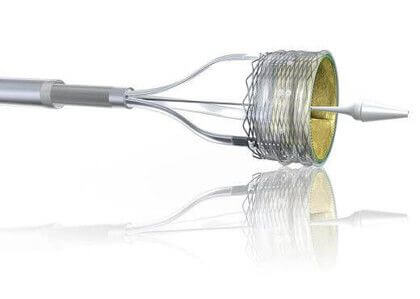
The Lotus valve, completely repositionable, uses a mechanical controlled expansion system that allows optimal repositioning, added to a polycarbonate-based urethane seal that adapts to annulus irregularities and minimizes paravalvular leak.
Read also: “What Is the Long-Term Outcome of Lesions Deferred Using FFR/iFR?”
The safety and efficacy of the Lotus valve was originally tested by the REPRISE I and II studies, though they included a small number of patients with very strict inclusion criteria.
The idea behind the RESPOND was to confirm prior studies in a larger, less select population: all-comer patients.
This study included 1014 patients from Europa, New Zealand and Latin America with severe aortic stenosis undergoing TAVR with Lotus valve. Mean age was 80.8 and mean STS was 6.0± 6.9. 29.2% of patients needed valve repositioning, which turned out successful in 99% of cases.
Read also: “The Use of Intravascular Imaging to Guide PCI Reduces Cardiovascular Death Risk, Compared to Angiography”.
All cause death rate was 2.6% (primary endpoint) which was higher than the prespecified performance for this population (p<0.001).
Pacemaker implantation rate was 34.6%, which is clearly the weakest point of this device.
On the other hand, the clearest strength of this device is the near lack of paravalvular leak, which was absent in 92% of patients; no patients had severe paravalvular leak, only 0.3% presented moderate leak, and 7.7% mild leak.
Read also: “Critical Lower Limb Ischemia Should Be Taken into Account in TAVR”.
This study will be followed up at 5 years.
Conclusion
The RESPOND study confirms the safety and efficacy of the Lotus valve in the daily clinical practice. The pacemaker implantation rate continues to be its weakness, and the lack of leak its strength.
Editorial Comment
The rate of moderate/severe leaks in this study was much lower than the reported in the ADVANCE with CoreValve (13.1%), in the SAPIEN 3 CE Mark Study (3.5%) or the DISCOVER with the Direct Flow valve (1.2%). In addition, mild paravalvular leak rate (7.7%) is the lowest ever reported for any TAVR system, and it is comparable to that of surgical valves.
At present, changes are being made to the Lotus valve to overcome its weaknesses. Basically, these changes are meant to reduce its interaction with the native outflow tract to reduce flow alterations. Researchers also seek to improve the release system profile and its flexibility to adapt to different anatomies, including tortuosity and calcification.
Original title: Safety and efficacy of a repositionable and fully retrievable aortic valve used in routine clinical practice: the RESPOND Study.
Reference: Volkmar Falk et al. Eur Heart J. 2017 Dec 1;38(45):3359-3366.
Get the latest scientific articles on interventional cardiologySubscribe to our weekly newsletter
We are interested in your opinion. Please, leave your comments, thoughts, questions, etc., below. They will be most welcome.



