






Courtesy of Dr. Adolfo Ferrero.
INTRODUCCION: In patients with chronic heart failure and reduced left ventricular ejection fraction, severe secondary mitral valve regurgitation is associated with bad prognosis. Whether percutaneous mitral valve repair improves clinical results in this patient population, remains unclear, despite prior multicenter studies supporting this view.
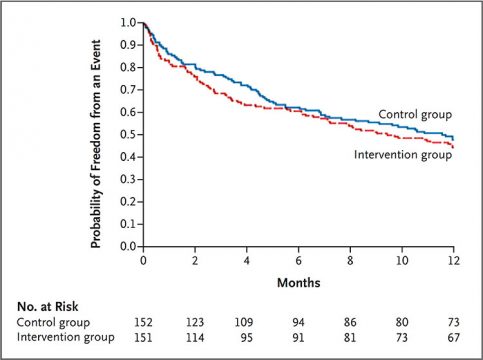
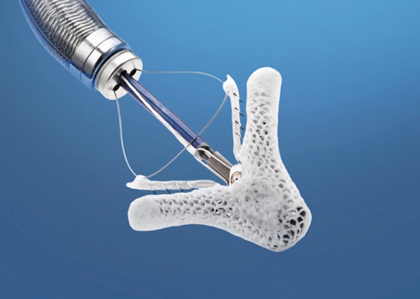 METHODS: Patients with severe secondary mitral valve regurgitation (defined as an effective regurgitant orifice area of >20 mm2 or a regurgitant volume of >30 ml per beat), left ventricular ejection fraction between 15 and 40%, and symptomatic heart failure, were randomized 1:1 to percutaneous mitral-valve repair in addition to medical therapy (intervention group; 152 patients) vs. medical therapy alone (control group; 152 patients). Primary efficacy end point was a composite of all cause death or unplanned hospitalization for heart failure at 12 months.
RESULTS: At 12 months, primary end point was 54.6% (83 of 152 patients) in the intervention group and 51.3% (78 of 152 patients) in the control group (OR 1.16; 95% CI, 0.73 to 1.84; P=0.53). All cause death was 24.3% (37 of 152 patients) in the intervention group and 22.4% (34 of 152 patients) in the control group (HR 1.11; 95% CI, 0.69 to 1.77). Unplanned hospitalization for heart failure was 48.7% (74 of 152 patients) in the intervention group and 47.4% (72 of 152 patients) in the control group (HR 1.13; 95% CI, 0.81 to 1.56).
Read also: Antiaggregation Time after Treating Bifurcations.
CONCLUSIONS: Among patients with severe secondary mitral regurgitation, death or unplanned hospitalization rates for heart failure at 1 year did not differ significantly between patients undergoing percutaneous mitral-valve repair and medical therapy, and those who received medical therapy alone.
Courtesy of Dr. Adolfo Ferrero.
Original title: Percutaneous Repair or Medical Treatmentfor Secondary Mitral Regurgitation.
Reference: J.-F. Obadia, Et Al. For the MITRA-FR Investigators. NEJM DOI: 10.1056/NEJMoa1805374.
Get the latest scientific articles on interventional cardiologySubscribe to our weekly newsletter
We are interested in your opinion. Please, leave your comments, thoughts, questions, etc., below. They will be most welcome.



