






This study was aimed at gaining device registration from the US Food and Drug Administration (FDA) for a polymer-free biolimus A9 drug-coated stent (BioFreedom, Biosensors).
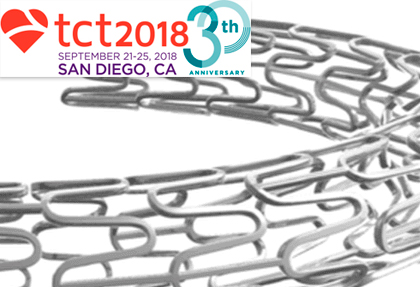 The study had two purposes: on the one hand, it meant to reproduce the results of the LEADERS FREE trial (published in 2015) in terms of safety and efficacy with only one month of dual antiplatelet therapy, and, on the other hand, it aimed to generalize results in North American patients, taking into account the LEADERS FREE control group (1189 patients who received bare-metal stents).
The primary safety endpoint was a composite of cardiac death and acute myocardial infarction at 1 year, and the primary efficacy endpoint was clinically-justified target-lesion revascularization.
This trial included 1148 patients who received BioFreedom devices (Leaders Free II) and were compared with the 1189 patients in the original Leaders Free control group.
Read also: TCT 2018 | IMPERIAL: First Study Comparing Drug-Eluting Stents in Patients with Femoropopliteal Disease.
The results of the original Leaders Free trial were confirmed in the North American population, thus supporting the use of polymer-free biolimus drug-coated stents in patients at high risk for bleeding who receive dual antiplatelet therapy for only 30 days.
Original title: LEADERS FREE II: Evaluation of a Polymer-Free Coronary Drug-Eluting Stent in High Bleeding-Risk Patients with One-Month Dual Antiplatelet Therapy.
Presenter: Mitchell W. Krucoff.
Get the latest scientific articles on interventional cardiologySubscribe to our weekly newsletter
We are interested in your opinion. Please, leave your comments, thoughts, questions, etc., below. They will be most welcome.



