



TCT 2018 | IMPERIAL: First Study Comparing Drug-Eluting Stents in Patients with Femoropopliteal Disease

The IMPERIAL trial compared the safety and efficacy of a nitinol self-expanding polymer-free placlitaxel-eluting stent (Zilver PTX, Cook Medical, already approved by the US Food and Drug Administration [FDA]) and a nitinol self-expanding polymer-coating placlitaxel-eluting stent (Eluvia, Boston Scientific).
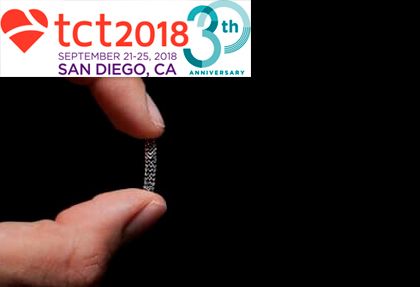
imperial-TCT 2018This was a single-blind randomized trial in patients with symptomatic intermittent claudication (Rutherford categories 2, 3, or 4) and native superficial femoral artery or proximal popliteal artery lesions.


The primary efficacy endpoint was primary vessel patency as determined by Doppler echocardiography at 12 months after the procedure. The primary safety endpoint was all-cause death, target-limb amputation, or repeat revascularization, at 12 months.


The trial included 465 patients randomized 2:1 (Eluvia n = 309 and Zilver PTX n = 156). Primary patency in the Eluvia group was 86.8% vs. 81.5% in the Zilver PTX group, thus achieving non-inferiority. The device was also non-inferior as regards safety; there were no deaths and one amputation at 13 months in the Eluvia group, and one revascularization in each group.


Read also: New Atrial Fibrillation After TAVR Indicates Prognosis.


A post hoc analysis showed that, at 9 months, patency in the Eluvia group was superior and the trend towards thrombosis was lower (about 50% less, although the comparison included few patients).


Original title: Twelve-Month Results of the IMPERIAL Randomized Trial: Comparing the Eluvia and Zilver PTX Stents for Treatment of Femoropopliteal Arteries.

Presenter: William A. Gray.


IMPERIAL-presentacion

IMPERIAL-articulo-original


Subscribe to our weekly newsletter

Get the latest scientific articles on interventional cardiology

We are interested in your opinion. Please, leave your comments, thoughts, questions, etc., below. They will be most welcome.


More articles by this author

Therapeutic strategies in carotid free-floating thrombus: evidence and controversies

Carotid free-floating thrombus (cFFT) is a rare entity with a high embolic risk, associated with acute neurological events such as stroke or transient ischemic...

ACC 2026 | SirPAD Trial: Sirolimus-coated balloon angioplasty in infrainguinal arterial disease

Paclitaxel-coated balloons have demonstrated improved patency in peripheral arterial disease (PAD), although questions remain regarding safety and applicability across different vascular territories. In this...

ACC 2026 | HI-PEITHO: Catheter-directed strategy (EKOS) in intermediate-risk acute pulmonary embolism

The treatment of intermediate-risk pulmonary embolism (PE) continues to be an area of therapeutic uncertainty. The initial PEITHO study (2014) demonstrated a reduction in...

ACVC 2026 | FLASH Registry European Cohort: Mechanical Thrombectomy in Pulmonary Embolism

The management of intermediate-high and high-risk pulmonary embolism (PE) remains an area of therapeutic uncertainty, particularly in patients with right ventricular (RV) dysfunction, in...

LEAVE A REPLY

Please enter your comment!
Please enter your name here

Related Articles

SOLACI Sessionsspot_img

Recent Articles

High Ischaemic Risk Criteria in Chronic Coronary Syndrome: Prevalence and Prognosis

Despite advances in the management of chronic coronary syndrome (CCS), including the widespread use of drug-eluting stents (DES) and the optimization of medical therapy,...

Management of Valve Thrombosis in TAVI: Current Evidence-Based Approach

The expansion of transcatheter aortic valve implantation (TAVI) into younger and lower-risk populations has brought bioprosthetic valve thrombosis to the forefront as a clinically...

Experience with the intra-annular self-expanding Navitor valve: data from the STS/ACC TVT registry

The expansion of TAVI, with the introduction of new-generation devices, has prioritized not only periprocedural safety, but also the preservation of coronary access, more...
