






Courtesy of Dr. Carlos Fava.
Currently, one of our medical challenges is to conduct procedures requiring access with large introducer sheaths in a simpler way, without requiring surgical intervention and closing with percutaneous devices while maintaining procedural quality and safety. There are several devices, but they require a learning curve and the only information available comes from small, non-randomized studies.
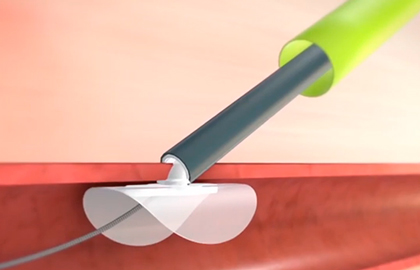 This study included 221 patients who underwent transcatheter aortic valve replacement (TAVR) and 33 who underwent endoprosthetic thoraco-abdominal aortic aneurysm repair. The percutaneous closure system used was Perclose ProGlide® Suture-Mediated Closure System (Abbott Vascular), which was placed before the procedure so as to conduct a vascular access-site closure after it. Additionally, Glubran 2 was injected after closure for hemostatic control. Moreover, a 0.018” guidewire and a peripheral angioplasty balloon were used through the contralateral access, for hemostasis.
The mean age was 82 years; over half the patients were female, 32% had diabetes, and 23.2% had had a prior infarction. The EuroSCORE score was 20.2 ± 2.32. About 78% of the patients had an estimated glomerular filtration rate (e-GFR) <60 mL/min and 3.6% underwent dialysis.
Read also: Amplatzer and Figulla Devices Prove to Be Safe for Percutaneous Patent Foramen Ovale Closure.
The overall success rate of the Perclose ProGlide® plus Glubran 2 access-site closure technique was 98.4%. Four patients (1.6%) required balloon dilation of the closure site after the suture due to the presence of severe stenosis; the strategy was successful.
Four patients (1.6%) had minor VARC-2 bleeding events. No patients experienced major VARC-2 bleeding events and no patients required surgery for access-site closure. The time of manual compression was 3.5 ± 1.5 minutes and the total procedure time was 89.35 ± 29.34 minutes.
Read also: Contemporary Results for Septal Embolization in Hypertrophic Cardiomyopathy.
At 30 days, the non-cardiac mortality rate was 0.4% and no patient experienced VARC-2 bleeding.
Conclusion
The results of this study suggest that the ProGlide/Glubran technique is a safe and effective method for the closure of transfemoral access-sites after TAVR and thoraco-abdominal aneurysm repair. However, those results need to be confirmed in randomized controlled trials before being adopted in routine clinical practice.
Courtesy of Dr. Carlos Fava.
Original title: A new Percutaneous technique for effective vascular Access Site closure in patients undergoing Transfemoral aortic valve implantation and thoraco-abdominal aortic aneurysm rEpair: The PASTE Study.
Reference: Giovanni Sorropago et al. EuroIntervention 2018;14: e1278-e1285.
Get the latest scientific articles on interventional cardiologySubscribe to our weekly newsletter
Su opinión nos interesa. Puede dejar su comentario, reflexión, pregunta o lo que desee aquí abajo. Será más que bienvenido.



