






Courtesy of Dr. Carlos Fava.
Nowadays, peripheral interventions are on the rise and the technological development of stents and balloons would help achieve better outcomes. Both drug-eluting stents (DES) and drug-coated balloons (DCB) have proved to be beneficial for femoropopliteal interventions, but the actual role of each of these technologies remains unclear.
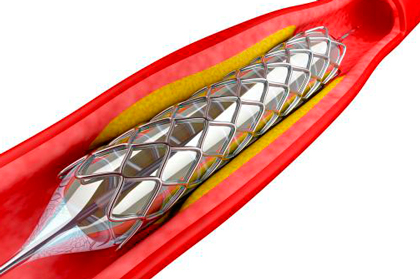 This prospective, randomized 1:1 study included 15 patients with intermittent claudication, femoropopliteal lesions, and Rutherford functional categories 2 to 5.
The devices used were the Zilver PTX platform stent (Cook Medical) and the In.Pact Admiral or In.Pact Pacific balloon (Medtronic Vascular).
Patient characteristics between groups were similar: the mean age was 69; 24% of patients had diabetes; most were classified as category 2-3; 20% had renal insufficiency; lesion length was 150 mm, and half the patients had total occlusions.
Read also: AHA 2018 | New-Generation DES Are Similar to Second-Generation DES Beyond Polymer.
In the DCB group, the bailout was 25%. Additionally, ≥30% residual lesions were also more frequent in that group.
Primary patency at 12 months was similar between groups (79.9% DEB, 79.3% DES; rate difference 0.6%; 95% confidence interval [CI]: 13% to 14.2%; p = 0.96) and there was a trend in favor of DES at 3 years. There were no differences as regards mortality or amputations. Improvement was similar for both groups.
Conclusion
Patency at 12 months, effectiveness, and safety of DES versus DCB plus bailout stenting in femoropopliteal interventions are comparable. There was a trend in favor of DES over DCB at 36 months.
Courtesy of Dr. Carlos Fava.
Original title: Drug-Eluting Stent Versus Drug-Coated Balloon Revascularization in Patients with Femoropopliteal Arterial Disease.
Reference: Yvonne Bausback et al. J Am Coll Cardiol 2019;73:667-79.
Get the latest scientific articles on interventional cardiologySubscribe to our weekly newsletter
We are interested in your opinion. Please, leave your comments, thoughts, questions, etc., below. They will be most welcome.



