






Courtesy of Dr. Carlos Fava.
The benefits of transcatheter aortic valve replacement (TAVR) are undoubtedly clear, but implantation is performed near the atrioventricular (AV) node, the bundle of His, and the left bundle branch. Consequently, permanent pacemaker implantation (PPI) after TAVR or surgical aortic valve replacement becomes necessary.
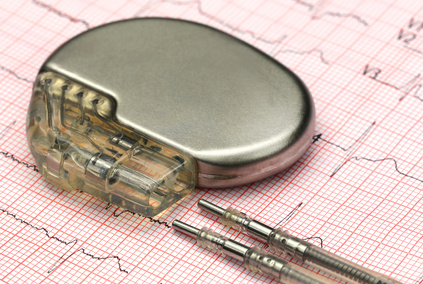
While researchers have recently developed strategies to reduce the need for PPI, it still has not been entirely shown who would require a pacemaker. In that sense, there is no fast and safe test to establish what patients need it, because currently we only have risk stratification criteria such as complete right bundle branch block, new left bundle branch block, complete AV block during the procedure, severe calcification, and valve type.
In this study, after valve implantation, the temporary pacemaker was withdrawn from the right ventricle and placed in the right atrium. Rapid atrial pacing was performed from 70 to 120 beats/min or until there was a complete AV block. The Wenckebach phenomenon was defined as a prolongation of the P-R segment during pacing, until there was a complete QRS block.
The study enrolled 284 patients. Among them, 130 experienced the Wenckebach phenomenon.
Both patient groups were similar: the age was 81 years old, 45% were women, 32% had diabetes, and there were no differences as regards New York Heart Association functional class. The Society of Thoracic Surgeons (STS) score was 5.6. End-stage renal failure was more frequent in patients who did not experience the Wenckebach phenomenon (3.2% vs. 0%; p = 0.0032), and first-degree AV block was more common in patients with the Wenckebach phenomenon (36.7% vs. 16.8%; p < 0.001).
There was no pericardial effusion, tamponade, or any other complications during atrial pacing. There was no difference either as regards 30-day complications between groups.
The need for permanent pacemaker at 30 days was higher among patients who experienced the Wenckebach phenomenon (13.1% vs. 1.3%; p < 0.001), with a 98.7% negative predictive value for permanent pacemaker.
Read also: TAVR and Pacemakers, New Strategies.
The need for permanent pacemaker was higher in patients with balloon-expandable valves (15.9% vs. 3.7%; p < 0.001), but it was very low in those who did not develop Wenckebach (2.9% and 0.8%).
Conclusion
Atrial pacing after TAVR is easily performed and can help identify patients who may benefit from temporary rhythm monitoring. Patients who did not develop pacing-induced Wenckebach phenomenon have a very low likelihood of permanent pacemaker implantation.
Courtesy of Dr. Carlos Fava.
Original Title: The Utility of Rapid Atrial Pacing Immediately Post-TAVR to Predict the Need for Pacemaker Implantation.
Reference: Amar Krishnaswamy, et al. J Am Coll Cardiol Intv 2020;13:1046-1054.
Get the latest scientific articles on interventional cardiologySubscribe to our weekly newsletter
We are interested in your opinion. Please, leave your comments, thoughts, questions, etc., below. They will be most welcome.



