






Courtesy of Dr. Carlos Fava.
Chronic total occlusions (CTO) are still one of the greatest challenges in our field, thus forcing the development of different complex strategies to resolve them. Additionally, the use of imaging techniques during these procedures has improved long-term results.
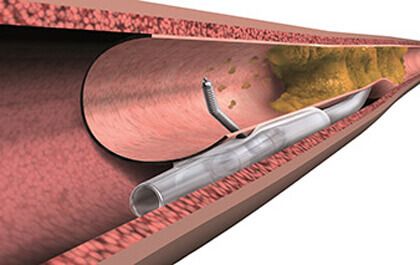
The CONSISTENT CTO (Conventional Antegrade Versus Sub-Intimal Synergy Stenting in Chronic Total Occlusions) study sought to analyze the benefit of dissection and re-entry techniques (DART).
The primary endpoint was the rate of target-vessel failure (TVF) at 12 months, defined as a composite of cardiac death, infarction, and ischemia-driven target-vessel revascularization (TVR).
The study enrolled 231 patients. Among them, 210 (91%) underwent successful angioplasty.
Mean age was 63 years old, 81.2% of patients were male, 21% of patients had diabetes, 18% had MRS, and 73% had a single-vessel lesion, most of them in the right coronary artery. Half of patients had normal systolic function.
DART was used in 101 patients; no re-entry technique was used in all others. CTOs were complex; the J-CTO score was 2.4, occlusion length was 29 mm, and the stenting length was 86 mm. DART cases experienced more MRS, had higher J-CTO scores (2.9 vs. 2, p = 0.001), longer occlusions (36.3 vs. 22.6 mm, p = 0.01), and longer stenting (96.6 vs. 75.4 mm, p = 0.001). Intravascular ultrasound (IVUS) was used before stenting in 91% of cases.
Read also: Post TAVR Regression of Ventricular Mass.
About 99.5% of cases underwent follow-up at 12 and 24 months; 90.8% underwent angiographic follow-up and 85.4% underwent optical coherence tomography (OCT) follow-up, both at 12 months.
The rate of TVF at 12 months was 5.7%, the rate of mortality was 1.4% (with no cases of cardiac death), the rate of infarction was 1.5%, and the rate of TVR was 7.1%. The rate of major adverse cardiac events (MACE) was 10% at 12 months. The rate of definite or probable stent thrombosis was 1.9%.
In 12- and 24-month analyses of diabetic patients, they experienced higher rates of MACE and TVF.
All patients experienced improvement in their quality of life.
Additionally, 179 patients underwent an angiography at one year. Binary angiographic restenosis occurred in 14.5% of them, with re-occlusion rates of 3.4%; IVUS showed a gain in luminal diameter of 1.86 mm, with a 0.14-mm late loss. OCT was conducted in 175 patients, 167 of whom had a full analysis done. Researchers analyzed 449,000 struts; the frequency of stent malapposition was 2.5 ± 4.7%, with a strut coverage per lesion of 91 ± 9.8%.
After 24 months of follow-up, TVF was 10%; only one patient had cardiac death; the rate of all-cause death was 4.3%, the rate of MACE was 17%, and the rate of definite or probable stent thrombosis was 2.9%.
Conclusion
Modern CTO angioplasty was associated with a mid-term follow-up comparable to follow-ups with complex angioplasty in other cohorts, and with improvement in quality of life. The use of DART with subintimal stenting did not have a negative effect on healing at 12 or 24 months, and there were no major cardiovascular events.
Courtesy of Dr. Carlos Fava.
Original Title: Intravascular Healing Is Not Affected by Approaches in Contemporary CTO PCI. The CONSISTENT CTO Study.
Reference: Simon J. Walsh, et al. J Am Coll Cardiol Intv 2020;13:1448–57.
Get the latest scientific articles on interventional cardiologySubscribe to our weekly newsletter
We are interested in your opinion. Please, leave your comments, thoughts, questions, etc., below. They will be most welcome.



