






The Latin American Registry of Percutaneous Coronary Bifurcations continues to develop at a steady pace. The aim of this prospective multicenter registry is to assess the reality of percutaneous coronary bifurcation to define its needs and establish effective strategies to perfect the daily clinical practice.
Bellow you will find data from January 2021, which includes all patients enrolled by the different Latin American centers taking part in the register.
January data
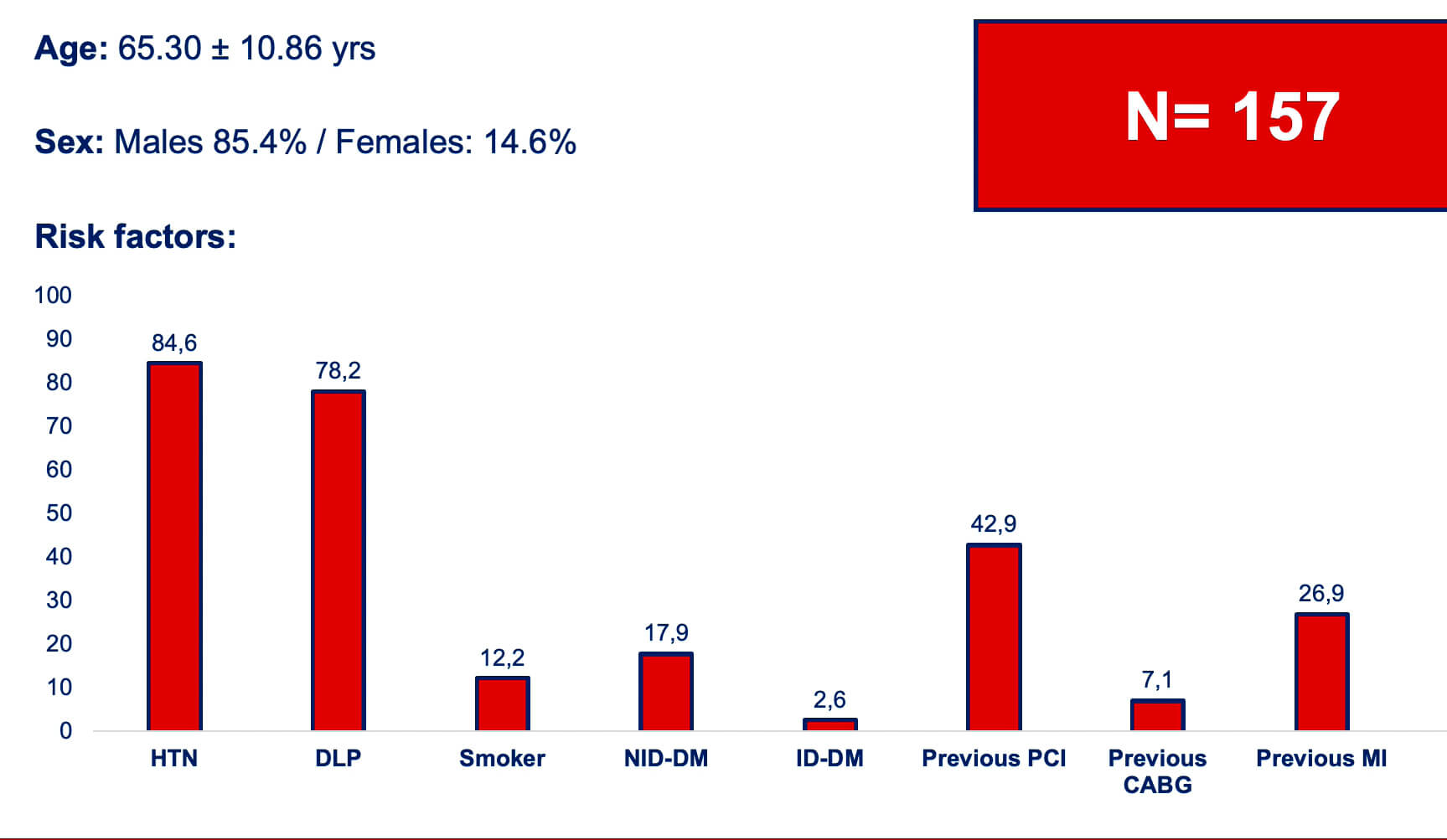
So far, the registry has included 157 patients of mean age 65 (+- 10.86): 85% men, and 15% women.
Among the risk factors, we have found 84,6% had a history of hypertension, 78,2% dyslipidemia, 12,2% were smokers, 17,9% had type 2 diabetes and 2,6% had type 1 diabetes. In addition, 42,9% had prior PCI, 7,1% prior CABG and 26,9% prior MI.
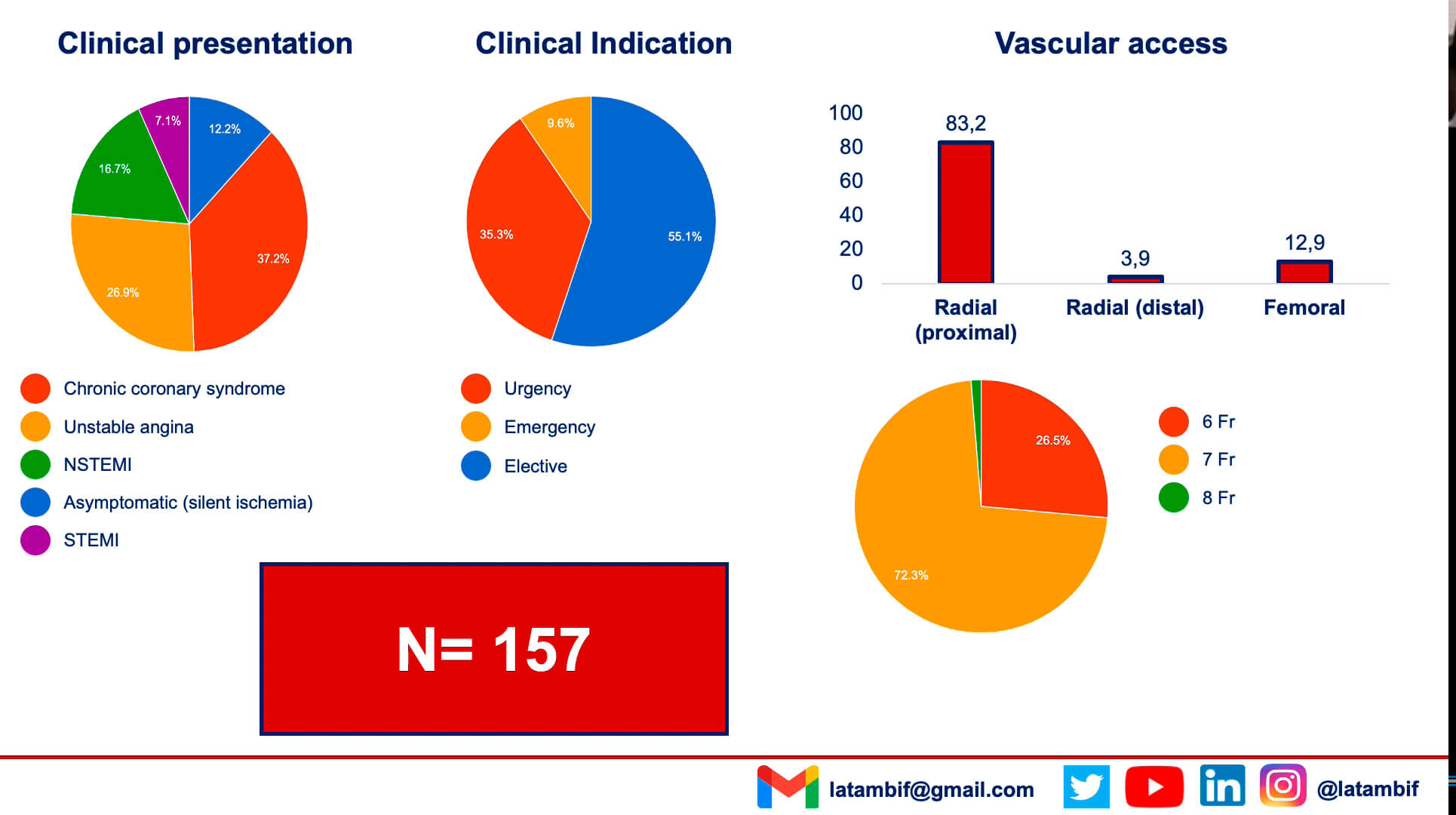
Of all included patients, 37,2% presented chromic coronary syndrome, 26,9% unstable angina, 16,7% Non-ST acute myocardial infarction (NSTEMI), 12,2% were asymptomatic (silent ischemia) 7,1 ST elevation MI (STEMI).
As regards clinical indications, 55,1% received elective indication, 35,3% urgent indication and 9,6 emergency indication.
83,2% of vascular access was transradial (proximal), 3,9% transradial (distal) and12,9% femoral.
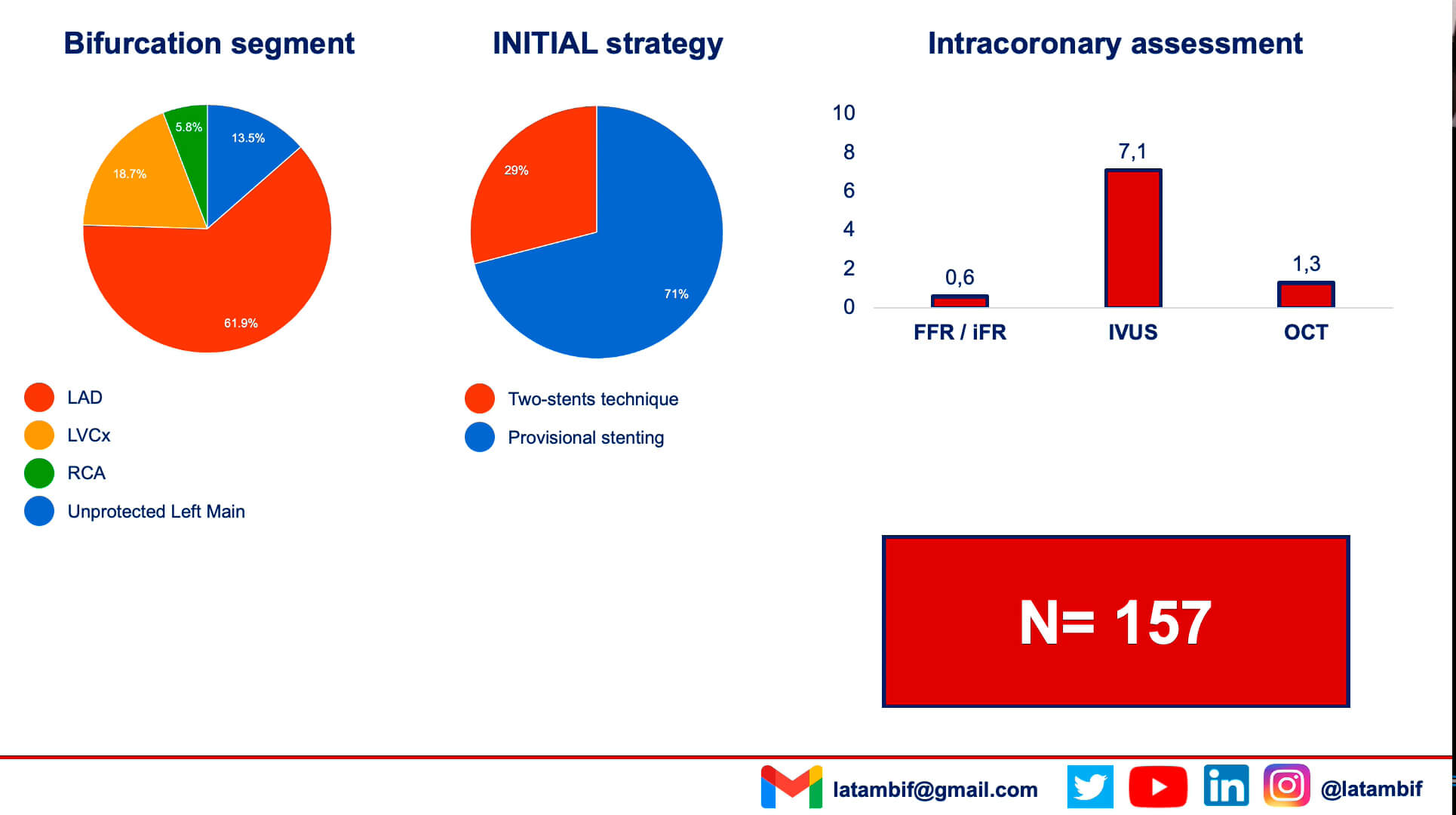
As to the initial strategy, 71% was the provisional stent technique and 29% the two stent technique.
How to make part of the LATAM Bif Registry?
Write to latambif@gmail.com. You will receive all the information and documentation required for LATAMBif, coordinated by SOLACI Research.
Why take part in LATAM Bif?
- The chance to access your own database dedicated to coronary bifurcations, with unified variables for all centers across Latin America.
- Each center will own their data and will be able to analyze outcomes in real time.
- The chance to interact with centers interested in research and publication throughout the region.
- The chance to present at local and international events the outcomes of LATAM Bif Registry.
- In case you might need help to develop research projects and/or carry out statistical analysis, you will have the support of SOLACI Research.
- SOLACI Research will provide weekly auditing for all data, initial and annual (mandatory followup), for it to be charged correctly.
Write now to latambif@gmail.com and start participating of LATAM Bif.
Subscribe to our weekly newsletter
Get the latest scientific articles on interventional cardiology



