



Last Bastion of Bare Metal Stents Finally Falls

Multiple studies have shown the safety and efficacy of drug eluting stents (DES) in patients with high risk of bleeding. Only one last bastion of bare metal stents (BMS) was left standing: vein grafts. 
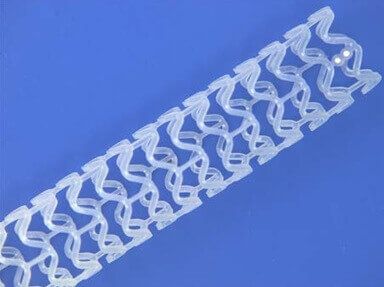
Cae el último bastión de los stents convencionales

With controversial evidence and different physiopathology, many still argued against DES in saphenous vein grafts. 

This multicenter study randomized patients with lesions in saphenous vein grafts to DES vs BMS. Primary end point was a combination of cardiac death, MI and target vessel revascularization at one year; secondary end point was these same events combined and also separately at 5 years. 

With 89 patients randomized to DES and 84 to BMS, events rate resulted significantly lower with DES (2.2% vs 16.0%, HR, 0.14; CI 95%, 0.03 to 0.64, p=0.01). This difference was conducted by fewer revascularizations and infarctions. 

At 5 years, the advantage of DES remained significative (35.5% vs 56.1%, HR, 0.40; 95% CI, 0.23–0.68, p<0.001).


Read also: Asymptomatic Patients: The Key to Understand the Prevalence of the COVID-19 Pandemic.


Between years one and 5, the difference was kept at the expense of revascularizations. 

Given the stark difference in events, it was decided to stop recruiting patients before reaching the target of 240.

Conclusion

This randomized, controlled, and multicenter study at 5 years in patients with saphenous vein graft lesions showed DES are superior to BMS, and their benefits are sustained in the long run. DES are superior to BMS in this population of patients and in all populations. 

JAHA-120-017434free

Original Title: Long-Term Results After Drug-Eluting Versus Bare-Metal Stent Implantation in Saphenous Vein Grafts: Randomized Controlled Trial.

Reference: Gregor Fahrni et al. J Am Heart Assoc. 2020;9:e017434. DOI: 10.1161/JAHA.120.017434.


Subscribe to our weekly newsletter

Get the latest scientific articles on interventional cardiology

 

More articles by this author

Comparison of strategies: NMA of IVUS, OCT, or angiography in complex lesions

Percutaneous coronary intervention (PCI) in complex lesions continues to represent a technical challenge in contemporary interventional cardiology. Angiography, although it remains the most widely...

Dynamic Coronary Roadmap: does it really help reduce contrast use?

Contrast-induced nephropathy remains a relevant complication of percutaneous coronary interventions (PCI), particularly in patients with multiple comorbidities and complex coronary anatomies. Dynamic Coronary Roadmap...

Long-Term Cardiovascular Risk in Patients With ANOCA: A Clinical Reality to Consider?

Chronic stable angina (CSA) remains one of the most frequent reasons for referral to diagnostic coronary angiography (CAG). In a substantial proportion of these...

Perforation Management in Bifurcations: Bench Testing of Bailout with Covered Stents

Coronary perforations during PCI are one of the most dreaded complications in interventional cardiology, especially in bifurcations. Though rate, this critical situation requires an...

LEAVE A REPLY

Please enter your comment!
Please enter your name here

Related Articles

SOLACI Sessionsspot_img

Recent Articles

VECTOR: First Percutaneous Aorto-Coronary Bypass Case, a New Conceptual Approach

Coronary obstruction represents one of the most severe complications associated with transcatheter aortic valve implantation, particularly in valve-in-valve scenarios involving surgical bioprostheses, narrow aortic...

Comparison of strategies: NMA of IVUS, OCT, or angiography in complex lesions

Percutaneous coronary intervention (PCI) in complex lesions continues to represent a technical challenge in contemporary interventional cardiology. Angiography, although it remains the most widely...

Is upper-limb aerobic training an effective alternative to lower-limb exercise in peripheral artery disease?

Peripheral artery disease is associated with impaired functional capacity, reduced walking distance, and poorer quality of life, and structured exercise is a class I...

