






Paravalvular regurgitation after transcatheter aortic valve replacement (TAVR) have historically been associated with worse clinical outcomes. Even mild leaks have been shown to be harmful.
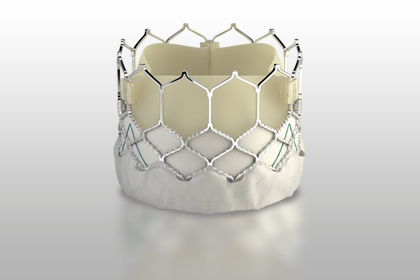
This study looked at a real-world experience with the transcatheter heart valve SAPIEN 3 Ultra in the US.
The SAPIEN 3 Ultra is a new generation balloon-expandable heart valve with an outer PET skirt specifically designed to reduce paravalvular regurgitation. However clinical and echocardiographic reports on this valve are currently limited.
It is worth mentioning any extra material added to the annulus outer perimeter can seal leaks but can also make the device larger and therefore increase the chance of harming the conduction system.
In this regard, the aim of this study was to compare short term outcomes of patients undergoing TAVR with SAPIEN 3 Ultra vs. the original SAPIEN 3 (S3) in a large registry of patients.
1,324 patients undergoing TAVR with Sapien 3 Ultra were compared using propensity score against 32,982 patients receiving the original Sapien 3. Finally 1,324 similar pairs of patients, except for the device, were included.
Read also: HOST-EXAM: The Study that Challenges Aspirin as Long-Term Antiplatelet Therapy.
At discharge, paravalvular regurgitation rate was significantly reduced with the S3 Ultra vs la S3 (mild leaks 9% vs 13.9% and moderate or greater 0.1% vs 0.4%; p<0.001 for both comparisons).
At 30 day-followup, there were no differences in all-cause mortality (1.8% vs 2.8%; p=0.1), major valvular complications (1.1% vs 1%; p=0.84) or need for a definite pacemaker (6.4% vs 6.2%; p=0.81).
Conclusion
This TVT analysis showed the Sapien 3 Ultra reduces paravalvular regurgitation rate compared vs its predecessor Sapien 3 thanks to its redesign with outer skirt. This modification did not have a negative impact on the rest of the events assessed in this study.
Original Title: Real-World Experience With the SAPIEN 3 Ultra Transcatheter Heart Valve: A Propensity-Matched Analysis From the United States.
Reference: Tamim M. Nazif et al. Circ Cardiovasc Interv. 2021 Aug 26;CIRCINTERVENTIONS121010543. Online ahead of print. doi: 10.1161/CIRCINTERVENTIONS.121.010543.
Subscribe to our weekly newsletter
Get the latest scientific articles on interventional cardiology



