






We are very proud to say that our multicenter, prospective research registry continues to grow by leaps and bounds.
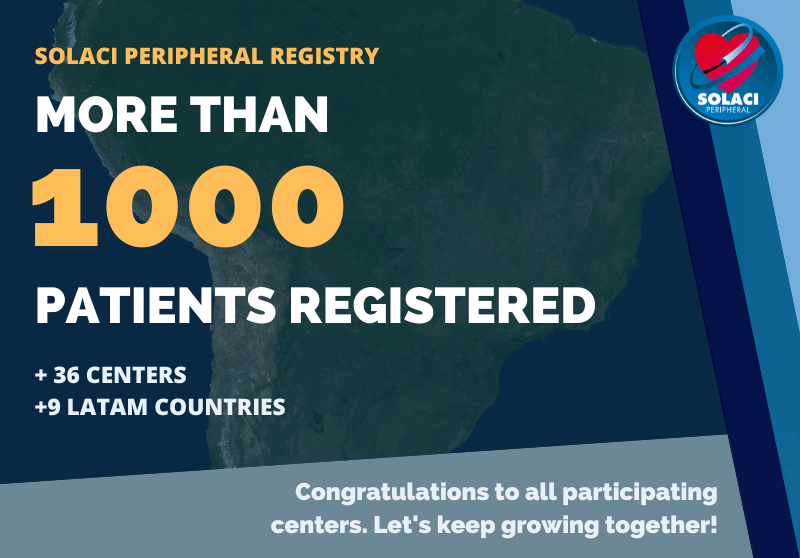
We want to congratulate the 36 centers from the 9 participating countries and invite the entire community to join this research initiative that aims to collect data on the reality of lower limb angioplasty in Latin America, in order to unify criteria, draw conclusions, and develop strategies to improve daily practice for these procedures.
▶ To be part of the SOLACI PERIPHERAL Registry or learn more about it, contact research@solaci.org
It should be noted that SOLACI Peripheral is a research program open to all centers in Latin America that may be willing to actively participate; in this sense, each participant center will have access to registry data in real time. Furthermore, participants will have authorship rights in all Registry publications and will secure the possibility of using Registry data for their own research projects.
The benefits of participating
- Access our own database dedicated to lower limb angioplasty, with unified criteria across Latin American centers.
- Analyze outcomes in real time with data from your own center.
- Interact with centers across the region interested in promoting research and furthering publishing.
- Present SOLACI Peripheral outcomes at local and international events.
- Benefit from SOLACI Research assistance to develop your research projects and/or statistical analysis.
- Work closely with SOLACI Research, who will oversee your progress weekly and will make sure all data be used correctly from start to finish, with annual (mandatory) followup.
Your participation is really important to SOLACI and to the entire SOLACI Peripheral Committee. We would be pleased and honored to have you join us in this important initiative.
To take part of SOLACI Peripheral Registry, please email us to: research@solaci.org
Subscribe to our weekly newsletter
Get the latest scientific articles on interventional cardiology



