






During complex percutaneous coronary interventions (PCI), it is common to use large-caliber guidewire catheters to provide greater support. Large-caliber transradial access has proven to be viable and safe in such procedures. However, a small radial artery, severe spasm, or variant anatomy are contraindications for this access, making transfemoral access a better choice in these cases.
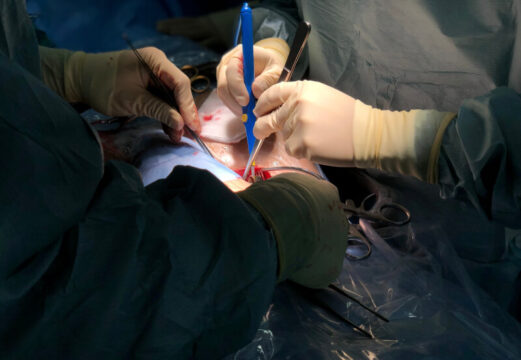
The use of ultrasound-guided puncture for transfemoral access has been shown to reduce vascular complications, but its use is not a routine procedure. In the recent UNIVERSAL clinical trial, ultrasound-guided transfemoral puncture did not result in a significant reduction in bleeding or vascular complications compared to fluoroscopy-guided access.
It is worth noting that one of the limitations of this trial was the low proportion of complex PCI cases and that most of the accesses used were 6 Fr. It is currently unclear whether there is any benefit in using ultrasound to guide transfemoral access in the case of large-caliber catheters (>7 Fr).
The objective of this multicenter randomized study was to demonstrate the superiority of ultrasound over fluoroscopy in complex PCI, specifically in terms of bleeding and/or vascular complications (BARC 2, 3, 5) that require intervention during hospitalization.
Lea también: Tratamiento borde a borde en la válvula tricuspídea: evolución a un año.
The primary endpoint (PE) was defined as clinically relevant bleeding at the access site or a vascular complication that required intervention during hospitalization. The secondary endpoint (SE) covered safety and efficacy aspects, including BARC 2, 3, or 5 bleeding at the transfemoral access site at 30 days of follow-up, BARC 2, 3, or 5 bleeding at secondary femoral or radial artery sites, major adverse cardiovascular events (MACE) at 30 days, vascular complications that did not require intervention, procedure time, access time, and success rate at the first puncture.
The study included a total of 544 patients, of whom 274 were randomized to the ultrasound-guided group and 270 to the fluoroscopy-guided group. The mean age was 71 years, and 76% of the subjects were men. The most frequent indication for complex PCI was stable angina, and 68% of patients required PCI for chronic total occlusion. The PE occurred in 18.9% of the fluoroscopy-guided group, compared with 15.7% of the ultrasound-guided group (p=0.32).
The success rate for the first puncture was 92% for the ultrasound-guided group, compared with 85% for the fluoroscopy-guided group (p=0.02). The median catheterization lab time was 102 minutes for the ultrasound group and 105 minutes for the fluoroscopy group (p=0.43), while the MACE rate at one month was 4.1% for the fluoroscopy group and 2.6% for the ultrasound-guided access group (p=0.32).
Conclusión
Routine use of ultrasound to guide transfemoral puncture in complex PCI did not significantly reduce clinically relevant bleeding or vascular complications compared with fluoroscopy, although it did improve first puncture success.
Original Title: Ultrasound-guided versus fluoroscopy-guided large-bore femoral access in PCI of complex coronary lesions: the international, multicentre, randomised ULTRACOLOR Trial.
Reference: Thomas A. Meijers , MD et al EuroIntervention 2024;20:e876-e886.
Subscribe to our weekly newsletter
Get the latest scientific articles on interventional cardiology



 complejas, es común utilizar catéteres de guía de gran calibre para proporcionar mayor soporte.)