






The use of drug eluting stents (DES) is currently recommended for the percutaneous treatment of coronary artery lesions. However, in-stent restenosis (ISR) continues to be the main issue, a challenge that presents in 5 to 10% of patients undergoing percutaneous coronary intervention (PCI). The European cardiology guidelines suggest the use of new generation DES and drug coated balloons (DCB) to treat ISR.
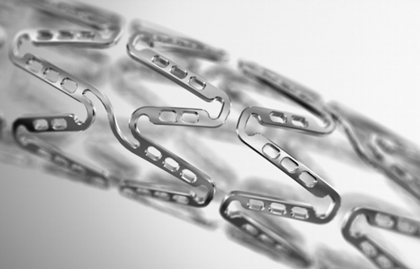
The interest for Bioresorbable stents (BVS) has been rising, seeing as besides their anti-proliferative properties, they have the capacity to disappear from the vessel, preventing the accumulation of additional layers of metal.
There are relevant studies in this context. On the one hand there is the RIBS VI (In-Stent Restenosis: Treatment with Bioresorbable Vascular Scaffolds; NCT02672878), a multicenter prospective study assessing the safety and efficacy of BVS in patients with ISR, with similar angiographic and clinical results to those of DCB at one-year follow-up. However, both strategies (DCB and BVS) have shown inferior studies vs. new generation DES.
On the other hand, we have the RIBS VI (In-Stent Restenosis: Bioresorbable Stents with Scoring Balloon), which did not manage to show additional benefits in patients with ISR. Nevertheless, there are no long term outcomes on the efficacy of BVS in this population.
The aim of this prospective, multicenter study was to assess the clinical efficacy and safety at long term of BVS in patients with ISR, compared against DES and DCB. Primary end point was target lesion revascularization at 3 years, cardiac death, acute MI, major adverse cardiovascular events (MACE) and stent thrombosis.
Read also: Failed Thrombus Aspiration in STEMI, and Impact.
718 patients were included in this analysis, 220 from the RIBS VI and RIBS VI scoring (95 with bare metal stent [BMS] ISR and 125 with DES ISR, treated with BVS) and 498 patients from the RIBS IV and RIBS V (309 with DES ISR and 189 with BMS ISR, 249 treated with DCB and 249 with DES). Mean age was 65 and most patients were men. The most frequent clinical presentation was stable acute coronary syndrome. The most treated coronary artery was the anterior descending, followed by the right coronary.
At three-year follow-up, target lesion revascularization after BVS was 14,1% (vs. 12,9% for DCB [not significant] and 5,2% for DES [HR: 2,80; CI 95%: 1,47-5,36; P = 0,001]). At one year, target lesion revascularization rate was significantly higher with BVS vs DES (HR adjusted: 3,41; CI 95%: 1,15-10,08) and DCB (HR adjusted: 3,33; CI 95%: 1,14-9,70). Very late stent thrombosis incidence was higher with BVS (BVS: 1,8%, DCB: 0,4%, DES: 0%; P = 0,03).
Conclusion
This study shows that in patients with ISR, the use of DES offers better clinical outcomes vs DCB and BVS. Also, during the first year, DCB were safer and more effective than BVS.
Original Title: Long-Term Results of Bioresorbable Vascular Scaffolds in Patients With In-Stent Restenosis The RIBS VI Study.
Reference: Javier Cuesta, MD et al (JACC Cardiovasc Interv 2024;17:1825–1836).
Subscribe to our weekly newsletter
Get the latest scientific articles on interventional cardiology



 para el tratamiento percutáneo de lesiones coronarias.)