






Courtesy of Dr. Carlos Fava.
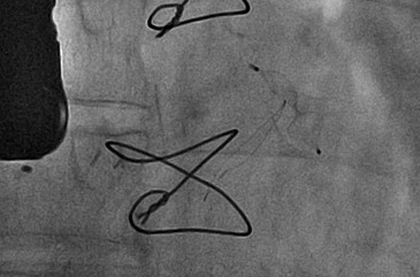 This study enrolled 72 patients who underwent transcatheter aortic valve replacement with an Edwards Sapiens valve, and then experienced a leak of at least moderate severity.
Fifteen of them underwent a percutaneous leak repair after identification of the leak mostly through the presence of symptoms.
Both groups were similar. Patients who underwent percutaneous repair were younger. Plugs were used in the repair, and no patient experienced hemolytic anemia.
The procedure was successful in 13 patients. In 2 of them, crossing of the leak was impossible to achieve. One patient who continued experiencing symptoms required a new intervention.
At 20 months of follow-up, there was 1 (13.8%) death in the group of patients who underwent a leak repair and 24 (42%) deaths in the control group. Leak repairs benefited patients, who experienced improvement in symptom status, reduction in subsequent hospitalizations, and reduction in B-type natriuretic peptide levels.
Conclusion
Transcatheter repair of paravalvular leaks after TAVR can be safe and effective in a selected patient group and may lead to reductions in hospitalizations, and improvement in symptoms and long-term survival.
Editorial Comment
Paravalvular leaks with current technology occur in 13%-15% of cases and are one of the technological challenges to be worked out in the future.
In these cases, identifying patients eligible for this procedure is of the utmost importance, since leaks can be repaired safely and effectively, improving quality of life and long-term survival.
Courtesy of Dr. Carlos Fava. Buenos Aires Favaloro Foundation, Argentina.
Title: Outcome of Paravalvular Leak Repair After Transcatheter Aortic Valve Replacement with a Balloon-Expandable Prothesis.
Reference: Abhijeet Dhoble, et al. Catheterization and Cardiovascular Interventions 2017;89:462-468.
Subscribe to our weekly newsletter
Get the latest scientific articles on interventional cardiology
We are interested in your opinion. Please, leave your comments, thoughts, questions, etc., below. They will be most welcome.



