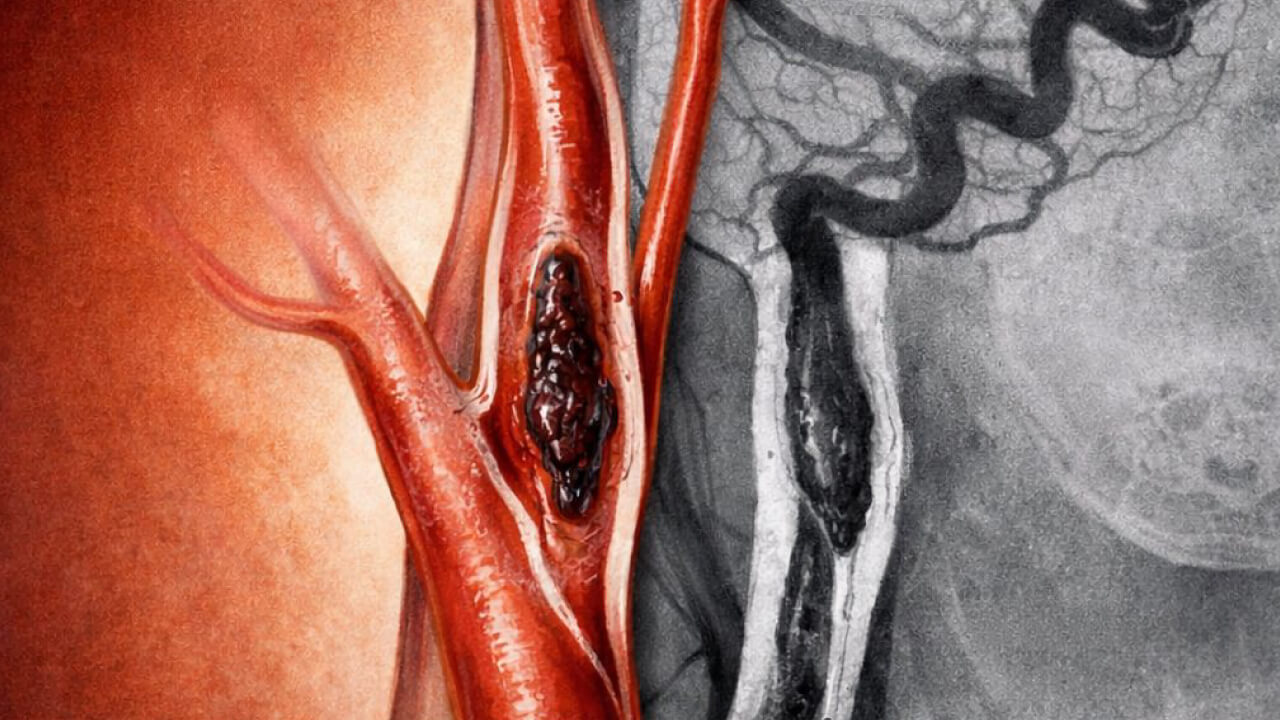
Carotid free-floating thrombus (cFFT) is a rare entity with a high embolic risk, associated with acute neurological events such as stroke or transient ischemic attack (TIA). Its incidence is low (0.05–0.62%), predominantly affecting younger patients compared to those with typical atherosclerotic carotid disease. Evidence regarding its management is limited and heterogeneous, and current guidelines recommend anticoagulation as first-line therapy mainly based on expert opinion. Therefore, this study systematically evaluated the safety and effectiveness of the available therapeutic strategies in patients with cFFT.
A systematic review of 11 studies (mostly retrospective) was conducted, including 179 adult patients with imaging-confirmed cFFT, preferably by CT angiography, showing an intraluminal thrombus with a free distal end and circumferential flow. The mean age was 58.3 ± 2.9 years, with a male predominance (60.9%), and 98.9% were symptomatic, mainly due to prior stroke (89.2%). The most frequent etiology was atherosclerotic (68.5%). Therapeutic strategies included antithrombotic management (AM) in 120 patients (67%), endovascular treatment (EVT) in 20 (11.2%)—including intravenous thrombolysis, intra-arterial thrombectomy, and carotid angioplasty—carotid endarterectomy (CEA) in 38 (21.2%), and combinations in isolated cases.
The primary endpoint was the composite of all-cause death and non-fatal stroke (death/stroke) at short-term (<30 days) and long-term (>30 days), while secondary endpoints included death and stroke separately, as well as associated complications.
In the short term, the overall death/stroke rate was 5.6%. According to treatment strategy, antithrombotic management (AM) showed the highest incidence (6.7%), followed by EVT (5.0%) and CEA (2.6%). Within the AM group, anticoagulation had the highest rates (7.5%). Non-fatal strokes occurred exclusively in the AM group (1.7%). Mortality was 5.0% in AM, 5.0% in EVT, and 2.6% in CEA.
In the long term (102 patients, mean follow-up 24.3 months), the overall death/stroke rate was 2.9%, with events occurring only in the AM group, and no events in EVT or CEA. A total of 28% of patients required a second therapeutic strategy, mostly after initial medical treatment, reflecting clinical instability and the limited effectiveness of this approach.
It is worth noting that no formal statistical comparisons were performed; therefore, results are descriptive and subject to selection bias and confounding by indication.
Stroke and mortality risk in carotid free-floating thrombus: outcomes by treatment strategy
In conclusion, carotid free-floating thrombus is associated with a significant risk of death or stroke regardless of treatment. However, isolated anticoagulation (the current first-line recommendation) is associated with higher event rates in both the short and long term, questioning its role as an initial strategy. In contrast, interventional strategies (surgical or endovascular) show better overall outcomes, with carotid endarterectomy demonstrating the lowest event rates.
In the case of endovascular treatment, outcomes may be influenced by the heterogeneity of techniques used and their variable ability to resolve the thrombus. Nevertheless, the available evidence is limited, non-randomized, and heterogeneous, and these findings should be interpreted with caution and require validation in higher-quality prospective studies.
Original Title: Management of carotid free-floating thrombus: a systematic review.
Subscribe to our weekly newsletter
Get the latest scientific articles on interventional cardiology