



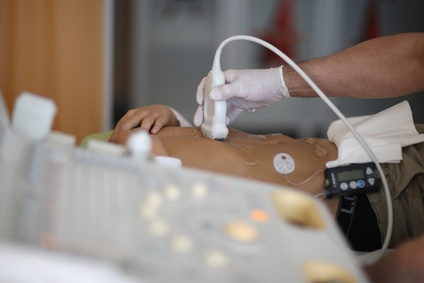
Modelos europeos de telemedicina, como el servicio finlandés Medilux, permiten realizar consultas médicas online mediante un cuestionario clínico, sin acudir a una consulta presencial.

AAA Screening in Men Over 65 Reduces Mortality

screening abdominal aortic aneurysmSystematic screening for abdominal aortic aneurysm (AAA) targeting all men over 65 years old (not just those presenting risk factors) was associated with a drop in the mortality rate specific for this disease, according to the Swedish Nationwide Screening Program.


While 667 men were examined for AAA, the number of patients who required treatment to prevent premature death due to aneurysm rupture was merely 1.5.


Such amazing treatment efficacy justifies screening despite the relatively low prevalence of this disease.


Randomized studies showed that screening through ultrasound followed by preventive surgery can reduce associated mortality in selected populations, but such a selection differs by location. This is, precisely, the novelty in this study: no selection was made; all men over 65 years old were studied.


In this registry, of 302,957 men who received an invitation to be screened, 84% finally accepted, a very high percentage.


AAA was detected in 1.5% of men, 29% of which underwent preventive surgery over a mean follow-up of 4.5 years.


Mortality at 30 days was significantly lower for endovascular treatment compared to open surgery.


Endovascular treatment: 0.3%

Open surgery:  1.3%

(p <0.001)


There was a significant reduction in mortality (4%) per year of screening (p = 0.02).


From 2000 (before the introduction of screening) to 2014, associated mortality dropped from 74 to 45 patients every 100,000 subjects.


Conclusion

Systematic screening for abdominal aortic aneurysm in men over 65 years old is highly cost-effective and reduces mortality associated to aneurysm rupture.


Original title: Outcome of the Swedish nationwide abdominal aortic aneurysm screening program.

Reference: Wanhainen A et al. Circulation 2016; Epub ahead of print.


We are interested in your opinion. Please, leave your comments, thoughts, questions, etc., below. They will be most welcome.


More articles by this author

SCAI 2026 | Deep vein arterialization as an alternative in patients with critical limb ischemia without conventional options

Critical limb ischemia (CLI) represents one of the most advanced stages of peripheral arterial disease (PAD). In a significant proportion of patients, distal anatomy,...

C-TRACT: Endovascular therapy in post-thrombotic syndrome due to iliac obstruction

Post-thrombotic syndrome (PTS) is one of the most limiting sequelae following proximal deep vein thrombosis (DVT). It clinically manifests as chronic pain, edema, skin...

Coil embolization of segmental arteries as a spinal cord protection strategy prior to complex endovascular repair of thoracoabdominal aorta

Spinal cord ischemia remains one of the most devastating complications in the repair of thoracoabdominal aneurysms, with incidences of up to 20–30% in extensive...

Mechanical thrombectomy versus anticoagulation in intermediate-risk pulmonary embolism: systematic review and meta-analysis

Intermediate-risk pulmonary embolism (PE) has anticoagulation as the standard treatment, while reperfusion strategies remain a matter of debate. In this context, mechanical thrombectomy has...

LEAVE A REPLY

Please enter your comment!
Please enter your name here

Related Articles

SOLACI Sessionsspot_img

Recent Articles

KISS Trial: provisional stenting in non-left main coronary bifurcations — is less more?

Coronary bifurcation angioplasty remains one of the most frequent and technically challenging scenarios in interventional cardiology. Between 15% and 20% of coronary procedures involve...

Complex radial access: a four-step protocol to overcome loops and tortuosity

Radial access is currently the preferred strategy for coronary angiography and percutaneous coronary interventions due to its lower rates of bleeding and vascular complications...

Percutaneous closure of paravalvular leaks in high-risk patients: clinical outcomes and the impact of residual leak

Paravalvular leak (PVL) is a relatively frequent complication following valve replacement (overall incidence 5–18%; 2–10% in the aortic position and 7–17% in the mitral...
