






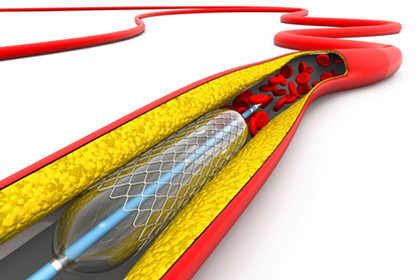
 Despite the fact that some randomized studies and meta-analyzis have suggested prolonged dual antiaggregation could be associated to increased death rate, the underlying mechanism remains unclear. It is only logical to assume that if there was an actual increase in mortality associated to prolonged antiaggregation, this should be due to bleeding; however, no studies have been able to render the figures to support this assumption.
This is the question the present study intends to answer by analyzing the association between bleeding, mortality and dual antiaggregation time after eluting stent (DES) implantation.
A meta-analyzis of all randomized studies comparing post DES antiaggregation times was carried out. Researchers obtained individual data from 6 randomizes studies and global data from other 12 randomized studies.
Death within one year after the bleeding event was considered “possibly associated to bleeding”.
It was clear that patients with a history of bleeding had significantly higher mortality than those who did not. After time adjusted multivariable analyzis, bleeding resulted an independent predictor of mortality within a year after the bleeding event. (HR: 6.93; CI 95%: 4.53 to 10.60; p<0.0001).
A shorter time of dual antiaggregation (DAPT) was associated with lower all cause death, comparted with prolonged DAPT (HR: 0.85; CI 95%: 0.73 to 1.00; p=0.05); this difference was driven by lower mortality associated to bleeding in those with shorter DAPT (HR: 0.65; CI 95%: 0.43 to 0.99; p=0.04). Death unrelated to bleeding resulted similar between the groups, which is also important, since death could increase due to ischemia caused by stent thrombosis.
Even though narrowly significant (confidence interval reached 0.99) it is safe to say that finally the figures have confirmed what seemed to be mere speculation.
Conclusion
Bleeding was significantly associated to mortality within one year of the bleeding event. Shorter times of DAPT is associated with lower risk of bleeding related death.
Original Title: Bleeding-Related Deaths in Relation to the Duration of Dual-Antiplatelet Therapy. After Coronary Stenting.
Reference: Tullio Palmerini et al. J Am Coll Cardiol 2017;69:2011–22.
Get the latest scientific articles on interventional cardiologySubscribe to our weekly newsletter
We are interested in your opinion. Please, leave your comments, thoughts, questions, etc., below. They will be most welcome.



