






TAVR has shown benefits in high risk patients (prohibitive) and in intermediate risk patients, but the need for permanent pacemaker implantation (PPI) continues to be a soft spot (especially in younger patients) given time of use, eventual replacement and associated complications.
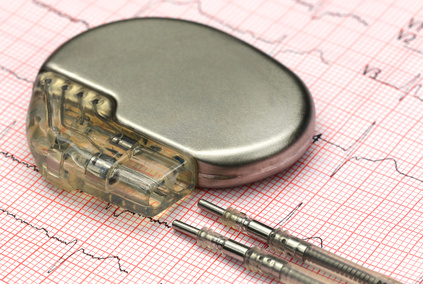
Even though there is little information on PPI, pacemakers are not associated with higher mortality, but they are associated to higher rate of hospitalization and lesser ventricular function at one year. There is no data of its true impact beyond this period.
This study analyzed 1629 patients without prior PPI undergoing TAVR from 2007 to 2015. 322 of these patients (19.8%) had to receive PPI within 30 days.
Read also: Pacemaker Implantation After TAVI Raises Costs But Not the Incidence of Adverse Events.
In general, patients receiving PPI were older (82± vs. 81±7 p=0.01), had higher rate of prior heart disease and a tendency to higher STS score (7.4±5.3 vs. 6.9±5.4 p=0.05). In addition, they frequently showed complete blockage of the right branch (26% vs. 6.5% p=<0.001).
The need for PPI was higher with self-expandable valves (CoreValve) vs. balloon expandable valves (Edwards systems) (26.9% vs. 10.9% p<0.001). There were no differences in PPI requirement in patients undergoing pre or post dilation.
At hospital level, there were no differences in complications, but those receiving PPI had longer hospital stay.
Read also: REPRISE III: Need for Pacemaker and Paravalvular Leak with Lotus.
Follow up was at 4 years (3-5 years) and there were no differences in mortality (48.5% vs. 42.9%, adjusted hazard ratio; 1.15; 95% confidence interval: 0.95 to 1.39, p=0.15), and cardiac mortality (14.9% vs. 15.5% adjusted hazard ratio: 0.95% confidence interval: 0.66 to 1.30; p=0.66).
However, those receiving PPI presented higher risk of repeat hospitalization for cardiac failure (22.4% vs. 16.1%; adjusted hazard ratio: 1.42; 95% confidence interval: 1.06 to 1.89; p=0.01) and lower ventricular function recovery in time, especially in patients with prior deterioration
The combined end point of mortality and repeat hospitalization for cardiac failure was higher in patients with PPI (59.6% vs. 51.9%; adjusted hazard ratio: 1.25; 95% confidence interval: 1.05 to 1.48; p=0.01).
Read also: End of Discussion on the Impact of Pacemaker After TAVR?
The use of PPI was >1 time in 86% of patients at four-year follow up.
There was no interaction with the type of valve employed.
Conclusion
The need for PPI after TAVR was frequent and was associated to increased repeat hospitalization for cardiac failure and lesser improvement of left ventricular function, but not in mortality, at four-year median follow up. Most patients requiring PPI showed some degree of pacemaker during follow up.
Editorial Comment
So far, this is the largest analyzis on the evolution of patients requiring PPI. It shows no impact in cardiac mortality, but it does affect rehospitalization for cardiac failure and left ventricular function at 4 year median follow-up.
Even though data are favorable in elderly high-risk patients, we should bear in mind we are moving on to younger, lower risk patients, which has not yet been properly assessed.
We should also know that most of these patients received first generation valves and that, at present, operators are more experienced, which will certainly have a positive impact in the near future.
Courtesy of Dr. Carlos Fava.
Original title: Long-Term Outcome in Patients with New Permanent Pacemaker Implantation Following Transcatheter Aortic Valve Implantation.
Reference: Chekrallah Chamandi, et al. J Am coll Cardiol 2018;11:301-10.
Get the latest scientific articles on interventional cardiologySubscribe to our weekly newsletter
We are interested in your opinion. Please, leave your comments, thoughts, questions, etc., below. They will be most welcome.



