



TCT 2018 | ReCre8 Trial: Permanent Polymer and Zotarolimus vs. Polymer-Free Amphilimus

Polymer-free amphilimus-eluting stents are a novel technology combining sirolimus and long-chained fatty acids. This enhances the uptake of antiproliferative agents and may be associated with lower restenosis, particularly among patients with diabetes. The new device includes abluminal reservoirs filled with the drug; in consequence, there is no need for polymer. This work compares this new device with a permanent-polymer zotarolimus-eluting stent (Resolute Integrity).
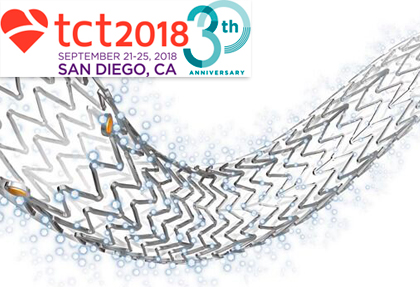
TCT 2018 | ReCre8 trial: Zotarolimus y polímero permanente vs Amphilimus libre de polímeroOverall, 1491 patients were randomized 1:1 after stratification for troponin status and diabetes. Troponin-positive patients received dual antiplatelet therapy for 1 year, whereas troponin-negative patients received it for only 1 month.


The primary endpoint was the classic composite of cardiac death, target-vessel infarction, and target-vessel revascularization at 12 months.


The primary endpoint occurred in 5.6% of patients in the zotarolimus group vs. 6.2% of patients who received the new device. The polymer-free amphilimus-eluting stent was non-inferior as regards the primary endpoint, and no difference was observed upon the assessment of each separate component. The overall rate of definite or probable stent thrombosis was 1%.


Read also: TCT 2018 | LEADERS FREE II: Polymer-Free DES in Patients at High Risk for Bleeding with 1 Month of Antiplatelet Therapy.


The analysis of specific groups such as patients with diabetes did not show any significant differences either. In consequence, further studies are required to warrant a wider use of this device.


Original title: Randomized All-Comers Evaluation of a Permanent Polymer Zotarolimus-Eluting Stent Versus a Polymer-Free Amphilimus-Eluting Stent: (ReCre8) A Multicenter, Non Inferiority Trial.

Presenter: Pieter Stella.


Subscribe to our weekly newsletter

Get the latest scientific articles on interventional cardiology

We are interested in your opinion. Please, leave your comments, thoughts, questions, etc., below. They will be most welcome.


More articles by this author

Plaque Ruptures in Non-Culprit Arteries: Follow-Up With Intravascular Imaging

Plaque rupture remains one of the most important pathophysiological mechanisms in acute coronary syndromes. However, not all ruptures manifest clinically as ischemia, myocardial infarction,...

OCT-Detected High-Risk Plaques Predict Recurrent Events After Myocardial Infarction

After a myocardial infarction (MI), non-culprit lesions are often deferred when they are not flow-limiting (negative FFR). However, these lesions continue to represent an...

Ticagrelor vs Clopidogrel in ACS Patients Receiving DOAC After PCI: More Bleeding Without Ischemic Benefit?

In patients with acute coronary syndrome (ACS) who require direct oral anticoagulation (DOAC) and undergo percutaneous coronary intervention (PCI), current guidelines recommend a dual...

EuroPCR 2026 | 10-Year Left Main PCI: When Survival Is Similar, Should the Less Invasive Strategy Prevail?

The primary goal of revascularization in left main coronary artery disease (LMCA) is to improve survival. However, debate continues regarding whether, in anatomically suitable...

LEAVE A REPLY

Please enter your comment!
Please enter your name here

Related Articles

SOLACI Sessionsspot_img
Jornadas Guatemala 2026

Recent Articles

Coronary Obstruction During TAVI: A New Volumetric Index to Consider

Coronary obstruction during TAVI is an uncommon but potentially catastrophic complication, particularly in valve-in-valve procedures, in anatomies with small sinuses of Valsalva, low coronary...

EARLY TAVR: Impact of Age on Outcomes of Early TAVR in Asymptomatic Patients

Asymptomatic severe aortic stenosis represents an increasingly common clinical challenge. Although current guidelines recommend intervention once symptoms develop or left ventricular dysfunction occurs, concerns...

Plaque Ruptures in Non-Culprit Arteries: Follow-Up With Intravascular Imaging

Plaque rupture remains one of the most important pathophysiological mechanisms in acute coronary syndromes. However, not all ruptures manifest clinically as ischemia, myocardial infarction,...
