






Reducing tricuspid regurgitation with transcatheter valve repair is associated to improved liver function, which is often ignored by many cardiologists. This is especially true in cases with deteriorated liver function prior valve repair. Instead, kidney function did not show any changes.
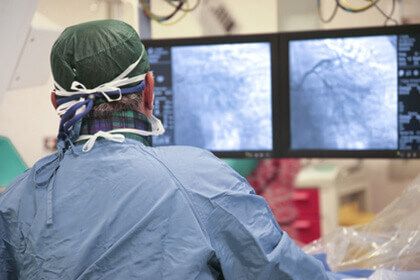
Transcatheter tricuspid valve repair seems attractive especially in patients with liver failure.
Edge to edge tricuspid valve repair emerged an alternative for inoperable patients, or even all patients, since surgical repair is associated with suboptimal results when it comes to repairing or replacing this valve. Always in the shadow of the aortic and mitral valves, tricuspid failure has significant impact on organs long ignored by many cardiologists (for instance the liver).
Read also: Surgery to Improve Survival in Isolated Tricuspid Regurgitation.
The study included 126 patients treated in a transcatheter repair center between 2016 and 2018. Baseline liver and kidney functions were registered and compared against 30-day and 6-month outcomes.
110 patients survived 6 months after procedure. Among them, kidney function remained stable, including that of patients with moderate to severe chronic kidney failure (baseline glomerular filtration 37.5 ml/min/1.73m² vs 40.1 ml/min/1.73m² at 6 months; p=0.39).
As regards liver function, there was significant improvement at 6 months, observed in transaminase and bilirubin levels. The poorer the baseline function, the more it improved.
Conclusion
Reducing tricuspid regurgitation with transcatheter edge to edge repair is associated with significantly improved liver function, while kidney failure remains stable compared to baseline.
This option appears more and more attractive for inoperable patients or even all patients.
Original Title: Impact of Transcatheter Tricuspid Valve Repair for Severe Tricuspid Regurgitation on Kidney and Liver Function.
Reference: Nicole Karam et al. J Am Coll Cardiol Intv 2019. Article in press.
Subscribe to our weekly newsletter
Get the latest scientific articles on interventional cardiology
We are interested in your opinion. Please, leave your comments, thoughts, questions, etc., below. They will be most welcome.



