






This post-hoc analysis of the SCOT-HEART shows low-attenuation plaque burden might successfully predict events. A greater number of low-attenuation plaques seems to be synonymous with greater risk which makes them better predictors than clinical scores, coronary calcification and stenosis degree.
IVUS, CT and carotid ultrasound are the accepted tools to diagnose plaque burden and predict future events. Calcium scoring might be the paradigm for coronary arteries and is based on logical deduction: the more plaques, the higher the chance of rupture leading to an event.
But there is a chance we might have been looking at the wrong kind of plaques. In fact, calcified plaques assessed by calcium scoring are the least likely to rupture. What matters is not just the number of plaques, but their nature.
Their composition was what this study looked at, directly measuring the number of low-attenuation plaques, which are considered most dangerous, as they are associated to a large lipidic necrotic core.
Read also: Virtual ACC 2020 | Myocardial Ischemia Induced by Sudden Mental Stress.
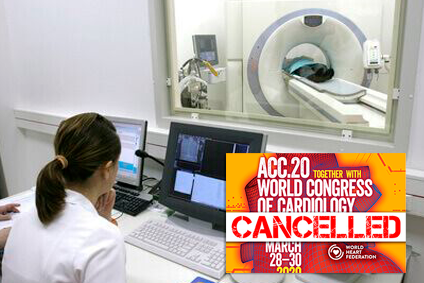
This study was originally accepted to be presented at the scientific sessions of ACC 2020 together with the World Congress of Cardiology, but the COVI-19 said no to the presentation. However, the information has reached us through Circulation.
The SCOT-HEART was a randomized study showing 41% events reduction such as death or infarction at 5 years when using coronary CT angiography instead of the standard treatment (basically a stress test) to manage patients presenting thoracic pain.
For the current analysis, the authors looked at baseline non-contrast electrocardiogram-gated CT from all SCOT-HEART patients.
Read also: Virtual ACC 2020 | Statins Could Also Protect Against Chemotherapy Cardiotoxicity.
Expert observers calculated calcium score as well as obstructive coronary artery disease defined as one or more epicardial vessels with 50% obstruction in the main left or 70% for the rest.
In the 1769 patients followed up at mean 4.7 years, they observed 41 fatal and non-fatal infarctions. Looking at the entire population, low-attenuation plaques correlated well with calcium score, rather badly with cardiovascular risk score and very well with stenosis severity. But when it came to predicting infarction, low-attenuation plaque burden was the most accurate factor.
Patients with 4% low-attenuation plaque burden, have 5 times higher chances of infarction, be it fatal or not.
Read also: TAVR in Extremely Large Annuli: Different Patients Might Need Different Prostheses.
Future studies such as the PROMISE and the CT CONFIRM will most likely validate this data, as well as the recent ISCHEMIA, where all the population had a CT at baseline.
Original Title: Low-attenuation noncalcified plaque on coronary computed tomography angiography predicts myocardial infarction: results from the multicenter SCOT-HEART trial.
Reference: Williams MC et al. Circulation. 2020; Epub ahead of print.
Subscribe to our weekly newsletter
Get the latest scientific articles on interventional cardiology
We are interested in your opinion. Please, leave your comments, thoughts, questions, etc., below. They will be most welcome.



