






No decision on the coronary tree has more impact than left main intervention. This makes interventionists prone to over and underestimation of angiographic imaging. In other words, in real life we never report on angiograms showing moderate left main lesions.
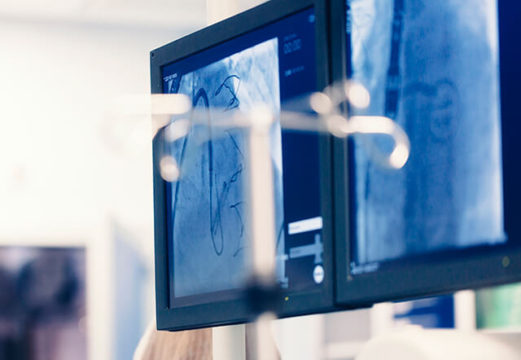
This reality should be looked into, since operating or intervening moderate left main lesions on a suspicious angiographic imaging doesn’t come free.
Interobserver variability was created when intravascular ultrasound (IVUS) started being published. The 6 mm2 minimal luminal cutoff area by IVUS resulted effective for revascularization decision making.
These studies offered an objective solution, but also raised a few questions. The cutoff value is an absolute number that does not take into account vessel reference diameter, or patient body surface area. A small woman can have < 6 mm2 luminal area in a perfectly healthy left main.
These were the questions behind the present study, published in Circulation, to assess the use of iFR in the assessment of angiographically intermediate left main lesions.
It included 125 patients assessed with iFR and IVUS. Researchers identified iFR ≤0.89 correlates well with minimal luminal area < 6 mm2. This cutoff value has and area under the curve of 0.77 (77% sensitivity and 66% specificity; p<0.0001).
69 patients with no anterior descending or circumflex ostial lesions showed and area under the curve of 0.84 (70% sensitivity and 84% specificity; p<0.0001).
Read also: Which Type 2 Endoleaks Should We Intervene?
This correlation was not influenced when considering patient body surface.
This is a good correlation; however, it does not seem enough for a left main lesion. Besides, IVUS not only is useful for diagnosing, but also for strategy planning and angiogram outcome optimization.
It the therapeutic decision were myocardial revascularization and there were other lesions to assess, we might be tempted to use iFR. However, there is evidence showing lesion functional assessment is not useful when it comes to surgical revascularization.
Conclusion
Instantaneous wave-free ratio (iFR) ≤0.89 correlated well with minimal luminal area < 6 mm2 by intravascular ultrasound imaging (IVUS)in intermediate left main lesions. This was true regardless patient body surface.
Original Title: Correlation of Intravascular Ultrasound and Instantaneous Wave-Free Ratio in Patients With Intermediate Left Main Coronary Artery Disease.
Reference: Circ Cardiovasc Interv. 2021 Jun;14(6):e009830. doi: 10.1161/CIRCINTERVENTIONS.120.009830.
Subscribe to our weekly newsletter
Get the latest scientific articles on interventional cardiology



