

The need for pacemaker after transcatheter aortic valve replacement (TAVR) remains slightly higher than with surgery, especially after the implantation of self-expanding valves. While certain implantation techniques have reduced this need, the use of pacemakers increases costs, requires an additional procedure, and carries potential hospital complications, such as tricuspid regurgitation or endocarditis, as well as complications related to follow-up and generator replacement.
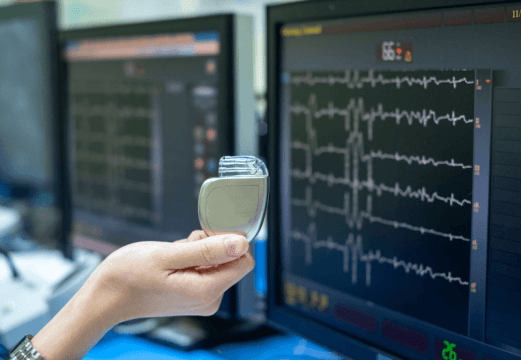
Leadless pacemakers could offer advantages over traditional ones, but that is yet to be demonstrated. Additionally, it is still unclear what happens once the battery runs out and one or more additional devices need to be implanted.
Researchers conducted an analysis on 165,272 patients who underwent TAVR between January 2017 and December 2020. Of these, 10,338 (7.2%) required permanent pacemaker implantation; 730 (7.06%) of them received leadless pacemakers (PPMI LDS), and the rest had transvenous pacemakers (PPMI T).
Patients who received PPMI LDS had more comorbidities, so the variables were adjusted to make the groups more uniform.
After adjustment, the mean age was 82 years, and 58% of subjects were men; 96% of the patients had hypertension, 50% had diabetes, 6% had had a heart attack, 84% experienced heart failure, 53% had atrial fibrillation, 58% had impaired renal function, 11% were on dialysis, and 13% had suffered a stroke.
The use of PPMI LDS increased 3.5 times over time.
The rate of hospital complications was lower with PPMI LDS (7.2% vs. 10.1%; P=0.014), especially concerning device-related complications (0.7% vs. 2.1%; P=0.015). However, the hospital stay was longer and entailed similar costs.
At two years of follow-up, there were no differences in all-cause mortality (adjusted hazard ratio [HR]: 1.13; 95% confidence interval [CI]: 0.96-1.32; P=0.15), heart failure hospitalizations (sdHR: 0.89; 95% CI: 0.74-1.08; P=0.24) or endocarditis (sdHR: 0.98; 95% CI: 0.44-2.17; P=0.95), but the rate for device-related complications was lower in those who received PPMI LDS (sdHR: 0.98; 95% CI: 0.44-2.17; P=0.95).
Conclusion
The use of leadless pacemakers increased over time and was associated with a reduction in in-hospital complications. In the medium-term follow-up, they had a complication rate that was similar to that of transvenous pacemakers and there were no differences in mortality.
Original Title: Comparison of Patient Outcomes Between Leadless vs Transvenous Pacemakers Following Transcatheter Aortic Valve Replacement.
Reference: Hiroki A. Ueyama, et al. JACC Cardiovasc Interv 2024;17:1779–179.
Subscribe to our weekly newsletter
Get the latest scientific articles on interventional cardiology