






At long term, atherosclerotic renal artery stenosis (RAS) can lead to hypertension, chronic kidney disease, and cardiac failure. Historically, these patients have been referred for revascularization consideration. However, randomized studies have clearly shown the real impact of renal artery stenting.
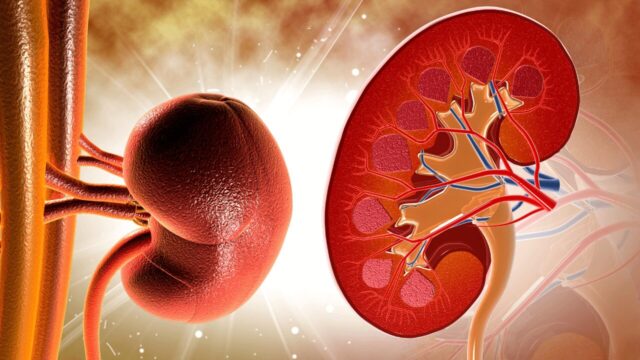
There are two traditional RAS references in the literature: the ASTRAL (Angioplasty and Stenting for Renal Artery Lesions) and the CORAL (Cardiovascular Outcomes in Renal Atherosclerotic Lesions). Neither of them showed significant benefits in primary outcomes.
A methodological analysis of these studies identified a few limitations, such as recruiting low risk populations and limited 34-month follow-up. The aim of O’Keeffe et al. (ASTRAL study group) was to look into the ASTRAL outcomes at long term (13 years), including their combined end points and a few adapted from the CORAL, both for the global cohort and the specific subgroups.
The original study consisted of randomizing patients with renal artery stenosis (RAS), confirmed by CT, MRI or digital subtraction, to receiving optimal medical treatment (statins and antiplatelets) or optimal medical treatment + revascularization. Primary end point was change in kidney function over time, measured by estimated glomerular filtration (eGFR). Secondary end points included time till first major renal event, first cardiovascular event and death. CORAL derived end points included time to renal event, cardiovascular or mortality event, and + 30% reduced renal capacity.
Read also: Long Term Outcomes of OCT Guided PCI in STEMI patients.
Initially, 806 patients were randomized with mean 13% loss at 56.4-month follow-up. Mean age was 71.3 years and 64% were women; mean eGFR was 40 ml/min/1.73 m², mean systolic pressure was 149.5 mmHg, 30.5% were diabetic, with 2.6 antihypertensive medication.
There were no significant differences in renal end points (HR 0.93; CI 95% 0.66–1.32; p=0.697), cardiovascular events (HR 0.91; CI 95% 0.73–1.13; p=0.413) or all-cause mortality (HR 0.93; CI 95% 0.77–1.21; p=0.43).
When looking at the specific subgroup with RAS >70% in both kidneys or one only functional kidney, revascularization was associated, not significantly, with reduced combined renal and cardiovascular (HR 0.74, CI 95%, 0.54–1.01; P=0.062) and mortality events (HR 0.70, CI 95% 0.49–1.0; P=0.051).
Annual progression to renal replacement therapy was 1.29% in the optimal medical treatment group and 1.25% in the revascularization group. When assessing annual mortality rate, it was 4.7% and 4.6%, respectively.
Conclusions
Prolonged follow-up of ASTRAL patients found out that renal stenosis revascularization did not present significant differences in renal/cardiovascular events. It is important to note that the low progression rate to renal replacement therapy, which might suggest included patients were not at such high risk of RAS.
Original Title: Long Term Outcomes After Renal Revascularization for Atherosclerotic Renovascular Disease in the ASTRAL Trial.
Reference: O’Keeffe H, Green D, de Bhailis A, Chinnadurai R, Wheatley K, Moss J, Kalra PA; ASTRAL Investigators. Long Term Outcomes After Renal Revascularization for Atherosclerotic Renovascular Disease in the ASTRAL Trial. Circ Cardiovasc Interv. 2024 Aug 15:e013979. doi: 10.1161/CIRCINTERVENTIONS.123.013979. Epub ahead of print. PMID: 39145377.
Subscribe to our weekly newsletter
Get the latest scientific articles on interventional cardiology



, enfermedad renal crónica (ERC) e insuficiencia cardíaca (IC).)