






Severely calcified femoropopliteal disease represents a significant clinical challenge, particularly concerning adequate lesion preparation before the implantation of antiproliferative devices such as drug-coated balloons (DCBs). In this context, mechanical atherectomy emerges as a valuable therapeutic tool.
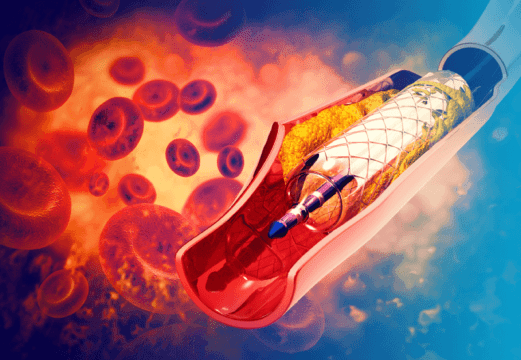
Japanese study INSIGHT-JETSTREAM uses advanced imaging technology — Optical Frequency Domain Imaging (OFDI) — to functionally and almost histologically characterize the performance of the Jetstream rotational atherectomy system (Boston Scientific) in real time.
The Jetstream system combines a rotational mechanism with metal blades that can operate in two modes: blade down (BD), with retracted blades and small diameter (2.1 mm), and blade up (BU), with deployed blades that reach up to 3.4 mm, allowing for a wider and more uniform eccentric cut. This technological flexibility helps reduce the bias associated with unidirectional contact of the device with the lesion, particularly in cases of hard or eccentric plaque.
The procedure was performed using a 7-Fr introducer sheath into the femoral artery, and OFDI imaging was conducted at different stages: before using the Jetstream, after 1.85 mm into the atherectomy, then after 2.4 mm in BD mode, after 2.4 mm in BU mode, and finally after angioplasty with a DCB.
The analysis included 36 severely calcified lesions treated with Jetstream and evaluated with OFDI before and after the procedure. Plaque was classified as calcified protrusion (CP), eruptive calcified nodule (ECN), and fibrous plaque (FP).
Read also: OCT Assessment of Bioresorbable Scaffold Performance across Different Types of Plaque.
ECNs showed the greatest luminal gain (LG) after using the BU mode, significantly outperforming the other morphologies. This can be explained mechanically and structurally: ECNs have a prominent, disruptive, and often mixed architecture with thrombi, making them more susceptible to the Jetstream device. In contrast, CPs are more rigid and adherent plaque, with more limited ablation. Quantitatively, the mean LG was 5.5 mm² in ECNs, compared to 4.3 mm² in CPs and 3.9 mm² in FPs.
The influence of wire bias (the distance between the guidewire and the center of the lumen) was also assessed. In BD mode, greater separation was associated with lower LG. This phenomenon was significantly reduced in BU mode, where the cut was more circumferential and less dependent on direct contact. This finding reinforces the value of BU as a strategy to mitigate operator-related technical bias.
Read also: Long-Term Outcomes of PFO Closure.
Finally, researchers assessed the presence of distal embolic material. Through angiography and clinical follow-up, embolization events were identified in approximately 16% of cases, most associated with ECNs. This suggests that, while ablation is effective, the systematic use of distal protection devices should be considered in cases related to eruptive plaque.
Conclusions
INSIGHT-JETSTREAM provides valuable evidence on the interaction between Jetstream atherectomy technology and different plaque morphologies, revealing that eruptive calcified nodules derive the greatest mechanical benefit. The use of OFDI as an assessment tool not only validated the ablative capacity of the system but also identified technical limitations and offered clinical recommendations, such as the preferential use of BU mode in eccentric lesions and the implementation of embolic protection in cases of vulnerable plaque.
Título original: INtravaScular OptIcal Frequency Domain ImaGing EvaluaTion of the Femoropopliteal Lesion With JETSTREAM Atherectomy (INSIGHT JETSTREAM).
Reference: Kuroda K, Kozuki A, Uzu K, Todoroki T, Iwasaki M, Imanishi J, Yamashita S, Fujimoto W, Takemoto M, Masuda M, Okuda M. INtravaScular OptIcal Frequency Domain ImaGing EvaluaTion of the Femoropopliteal Lesion With JETSTREAM Atherectomy (INSIGHT JETSTREAM). Catheter Cardiovasc Interv. 2025 May;105(6):1287-1295. doi: 10.1002/ccd.31460. Epub 2025 Feb 19. PMID: 39969193; PMCID: PMC12057308.
Subscribe to our weekly newsletter
Get the latest scientific articles on interventional cardiology



