






Severe aortic stenosis in women presents several differences compared to men, such as smaller aortic annuli, greater diffuse myocardial fibrosis, more pronounced concentric hypertrophy, more frequent diastolic dysfunction, and a higher incidence of heart failure with preserved ejection fraction. It is also usually associated with a lower prevalence of coronary artery disease and valvular calcification.
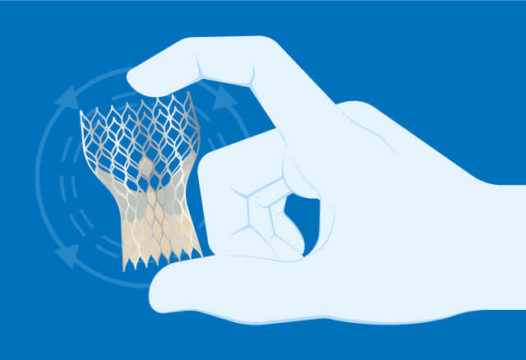
As is well known, transcatheter aortic valve replacement (TAVR) has shown benefit across different risk groups. In women, various analyses have revealed a higher association with vascular complications, renal failure, prosthesis–patient mismatch, and mortality.
The RHEIA study—a randomized, multicenter trial—included 420 women with severe aortic stenosis. Of these, 215 were treated with TAVR and the rest with surgical aortic valve replacement (SAVR).
TAVR was conducted using balloon-expandable SAPIEN 3 and SAPIEN 3 ULTRA valves.
Patients with unicuspid, bicuspid or non-calcified aortic valves, complex coronary artery disease, or unfavorable anatomical features for either TAVR or SAVR were excluded.
The primary endpoint (PEP) was a composite of all-cause mortality, stroke, valve-related rehospitalization, or worsening heart failure at one year of follow-up.
Read also: Early and Late Readmission after Left Atrial Appendage Closure.
Baseline characteristics were similar in both groups: mean age of 73 years, STS mortality score of 2.1%, and EuroSCORE of 1.7%. The prevalence of diabetes was 26%, coronary artery disease 19%, peripheral vascular disease 3%, chronic obstructive pulmonary disease (COPD) 6.5%, prior stroke 3.6%, and minimal renal insufficiency.
The presence of atrial fibrillation was 4%, permanent pacemaker 3%, complete right bundle branch block 6%, and complete left bundle branch block 6%.
The ejection fraction was 67%, the average valve area was 0.8 cm², the mean gradient was 48 mmHg, the annular perimeter was 72 mm, and the annular area was 400 mm².
The most commonly used valve size in TAVR was 23 mm (63%), followed by 26 mm.
Read also: Post-Rotational Atherectomy Imaging in Femoropopliteal Lesions (INSIGHT-JETSTREAM).
At one year, the primary endpoint favored TAVR: 8.9% vs. 15.6% (−6.8% with a 95-% upper confidence limit of −1.5%, demonstrating non-inferiority relative to the prespecified margin of 6%; p <0.001). Furthermore, the two-sided 95-% confidence interval (CI) (−13.0% to −0.5%) provided evidence of superiority (p = 0.034).
All-cause mortality was 0.9% in the TAVR group and 2% in the SAVR group (hazard ratio [HR] = 0.47; 95% CI: 0.09–2.59). The incidence of stroke was similar: 3% vs. 3.3% (HR = 1.12; 95% CI: 0.37–3.32). The rehospitalization rate was lower in the TAVR group: 5.8% vs. 11.4% (HR = 0.40; 95% CI: 0.18–0.81).
Atrial fibrillation was more common in patients who underwent SAVR (28.8% vs. 3.3%), whereas the need for a pacemaker was higher with TAVR (8.8% vs. 2.9%).
Both groups showed improvement in functional class, the six-minute walk test, and quality of life.
Conclusion
Among women with severe aortic stenosis, the incidence of the composite outcome of death, stroke, or rehospitalization at one year was lower with TAVR than with SAVR.
Original Title: Transcatheter vs. surgical aortic valve replacement in women: the RHEIA trial.
Reference: Didier Tchetche, et al. European Heart Journal (2025) 46, 2079–2088.
Subscribe to our weekly newsletter
Get the latest scientific articles on interventional cardiology



