






Original Title: Incidence and Clinical Outcome of Stent Fractures on the Basis of 6555 Patients and 16482 Drug Eluting Stents From 4 Centers.
Reference: Kan J et al. JACC Cardiovasc Interv. 2016 Jun 13;9(11):1115-23.
Courtesy of Dr. Guillermo Migliaro.
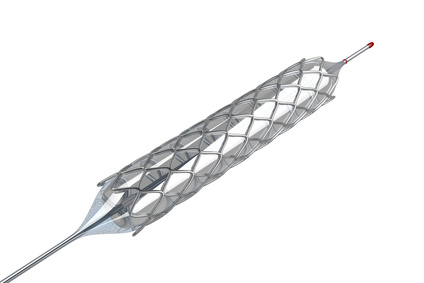 Stent fracture (SF) has been associated with instent restenosis (ISR), stent thrombosis (ST) and repeat revascularization (TLR), particularly in the DES era. However, its incidence ─especially with new generation DES─ and clinical complications remain unknown.
The aim of this study was to assess the incidence of stent fracture and its correlation with clinical events and treatment outcomes.
This retrospective registry included 6555 patients receiving 16,482 DES in 10,751 vessels between the years 2003 and 2014 in four centers in China. Patients were followed up angiographically at one year after procedure. Patients with conventional stents and/or poor quality angiographies were excluded. Final end points included stent fracture, instent restenosis, target lesion revascularization, and stent thrombosis at the end of follow up. The study also included propensity score matching to assess end points.
Stent fracture was detected in 803 patients (12.3%), 3,630 stents (22%) and 1,852 vessels. Its incidence increased during follow up. 49% of cases were observed after the second year.
Independent predictors of stent fracture were:
- Stents in the right coronary artery (OR 10.8),
- Stainless steel stents (OR 2.6),
- Stents longer than 25 mm. (OR 2.4),
- Stents in places with excessive motion or angulation (OR 7.44),
- Overlapping stents (OR 4.0),
- Multiple stents (OR 5.22),
- >0.8 stent vessel ratio requiring post dilation with larger or high pressure balloons (OR 5.28)
Even though the majority of cases were diagnosed by angiography and stent boost, a few needed coronary intravascular ultrasound and optical computed tomography for confirmation.
Stent fracture was associated to:
- Instent restenosis in 42% of cases.
- Target lesion revascularization in 24%.
- Stent thrombosis defined in 4.6% (p< 0.001 compared with those without SF).
Differences remained significant after propensity score matching. There were no differences in overall mortality or cardiac mortality in patients with and without SF.
Of 379 symptomatic SF caused by instent restenosis requiring treatment, a new DES was implanted in 53% of cases and balloon angioplasty in the remaining 47%. After an average follow up of 1,523 days, 23.8% presented new instent restenosis and 7.5% needed reintervention. These results did no show significant differences in the group without stent fracture.
Conclusion
Stent fracture in frequent after DES implantation and is associated with high instent restenosis and target lesion revascularization rates. This increase in events does not translate into an increase in mortality compared to the group with no SF. Instent restenosis treatment have acceptable results and similar to the rest of patients with no SF. Given that stainless steel stents are predictors of SF, these should be replaced by cobalt chromium scaffolds.
Editorial Comment
So far, the present registry is the largest to assess SF in DES.
Its main contribution is to document SF as a frequent finding, because it is not usually taken into account (neither considered nor diagnosed) and it has an elevated clinical events rate, both in the short and long run.
By knowing SF predictors, we are able to use more tools to prevent it, such as limiting stent length and overlapping as much as possible, consider alternative devices for zones with excessive motion and angulation, avoiding aggressive post dilation with small diameter stents and choosing alternative scaffolds over stainless steel ones.
Courtesy of Dr. Guillermo Migliaro. German Hospital, Buenos Aires, Argentina.
Your opinion matters to us. You are most welcome to leave your comment, reflection, question or any ideas down below.



