



New generation DES present better results in vein grafts than older DES and BMS

There is little information comparing contemporary drug eluting stents (DES)  against bare metal stents (BMS), for PCI in saphenous vein grafts in patients receiving (CABG).
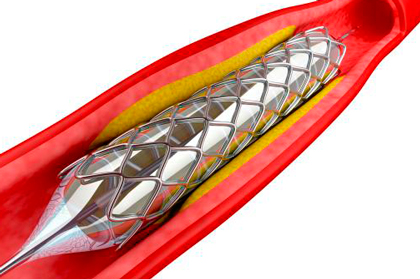
 New Generation DES Present Better Results in Vein Grafts than Older DES and BMS

This study aimed to assess clinical outcomes after PCI in saphenous vein grafts in patients receiving BMS, first generation DES, and new generation DES between 2006 and 2013. The study included inhospital events, and 30 day and one year mortality rates.


A total 15,003 patients received PCI in saphenous vein grafts during this period: 38% received BMS, 15% received first generation DES and 47% new generation DES.


Inhospital major adverse cardiovascular events was significantly lower in patients treated with new generation DES (OR, 0.51; CI 95%, 0.38–0.68; p<0.001) compared to those receiving older DES or BMS.


Also Read: “Second Generation DES Present Lower Mortality in Saphenous Vein Graft Lesions”.


 Similarly, 30 day (OR, 0.43; CI 95%, 0.32–0.59; p<0.001) and one year mortality (OR, 0.60; CI 95%, 0.51–0.71; p<0.001) were lower with new generation DES.


Conclusion

Patients receiving new generation DES in saphenous vein grafts present lower inhospital adverse events rate, and lower 30 day and one year mortality compared to first generation DES and BMS.


Editorial Comment

A significant number of vein grafts (10-40%) will be occluded in the first year and this will inexorable continue at a 2-5% annual rate, which accelerates as time goes by. The risk of reintervention and the technical difficulty to treat the native artery makes it necessary to treat vein grafts with PCI (it might even reach 10% of cases).


Several factors make this territory more challenging for PCI and there is no doubt that this disease is far more aggressive in vein grafts than in native arteries. This difficulty, however, does not affect the choice of device: new generation DES are also better in this territory.


Original title: Choice of Stent for Percutaneous Coronary Intervention of Saphenous Vein Grafts.

Reference: Javaid Iqbal et al. Circ Cardiovasc Interv. 2017;10:e004457.


Subscribe to our weekly newsletter

Get the latest scientific articles on interventional cardiology

We are interested in your opinion. Please, leave your comments, thoughts, questions, etc., below. They will be most welcome.


More articles by this author

Hybrid Coronary Revascularization versus Conventional Bypass Surgery in Left Main Coronary Artery Disease

Significant left main coronary artery (LMCA) disease continues to represent a therapeutic challenge, particularly in patients with complex multivessel disease and high SYNTAX scores,...

Comparison of strategies: NMA of IVUS, OCT, or angiography in complex lesions

Percutaneous coronary intervention (PCI) in complex lesions continues to represent a technical challenge in contemporary interventional cardiology. Angiography, although it remains the most widely...

Dynamic Coronary Roadmap: does it really help reduce contrast use?

Contrast-induced nephropathy remains a relevant complication of percutaneous coronary interventions (PCI), particularly in patients with multiple comorbidities and complex coronary anatomies. Dynamic Coronary Roadmap...

Long-Term Cardiovascular Risk in Patients With ANOCA: A Clinical Reality to Consider?

Chronic stable angina (CSA) remains one of the most frequent reasons for referral to diagnostic coronary angiography (CAG). In a substantial proportion of these...

LEAVE A REPLY

Please enter your comment!
Please enter your name here

Related Articles

SOLACI Sessionsspot_img

Recent Articles

Hybrid Coronary Revascularization versus Conventional Bypass Surgery in Left Main Coronary Artery Disease

Significant left main coronary artery (LMCA) disease continues to represent a therapeutic challenge, particularly in patients with complex multivessel disease and high SYNTAX scores,...

VECTOR: First Percutaneous Aorto-Coronary Bypass Case, a New Conceptual Approach

Coronary obstruction represents one of the most severe complications associated with transcatheter aortic valve implantation, particularly in valve-in-valve scenarios involving surgical bioprostheses, narrow aortic...

Comparison of strategies: NMA of IVUS, OCT, or angiography in complex lesions

Percutaneous coronary intervention (PCI) in complex lesions continues to represent a technical challenge in contemporary interventional cardiology. Angiography, although it remains the most widely...
