






Transcatheter aortic valve replacement (TAVR) was developed as a strategy to treat non-surgical aortic stenosis, and was later expanded to elderly patients at intermediate risk, because of increased operator experience (overcoming the learning curve) and improved devices.
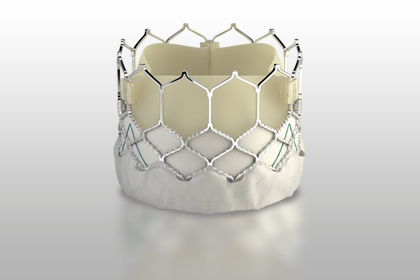
The present study presents the one year outcomes of the SOURCE 3 trial, the multicenter European registry of the latest generation balloon expandable SAPIEN 3 (Edwards Lifesciences, Irvine, CA, USA).
Read also: “New Study Confirms TAVR Durability at 5 Years”.
Participating hospitals (80 centers in 10 European countries) sent a total 1946 consecutive patients receiving the SAPIEN 3 between 2014 and 2015.
At one year, all cause mortality was 12.6%, cardiovascular mortality was 8%, stroke 3.1%, disabling stroke 1.4% and pacemaker need 13.2% for a population with 81.6 mean age.
More than 60% of deaths were of cardiovascular cause, mainly cardiac failure (13.4%) and pulmonary complications (12.7%).
Read also: “2.0-mm DES for Very Small Vessels: Are They Viable?”
La clase funcional IV y la insuficiencia renal resultaron predictores de mortalidad en el análisis multivariado, mientras que un BMI alto resultó protector.
No patient presented paravalvular leak, while only 2.6% presented moderate failure at one year.
Conclusion
The SOURCE 3 showed low complications and mortality rates at one year with the latest generation balloon expandable SAPIEN 3. Given the sensibly low incidence of moderate/severe paravalvular leak, most likely this complication will no longer affect long term outcomes.
Editorial Comment
Procedural Complications such as paravalvular leak and vascular complications, have been shown to be strong one year mortality predictors, which was not seen in this registry. This might be due to the lower leak rate associated to the PET skirt the new generation valve adds, which helps seal tissues a provides device and native annulus continuity.
Original Title: SOURCE 3: 1-year outcomes post-transcatheter aortic valve implantation using the latest generation of the balloon-expandable transcatheter heart valve.
Reference: Olaf Wendler et al. Eur Heart J. 2017 Sep 21;38(36):2717-2726.
Get the latest scientific articles on interventional cardiologySubscribe to our weekly newsletter
We are interested in your opinion. Please, leave your comments, thoughts, questions, etc., below. They will be most welcome.



