






Both balloon-expandable and self-expanding valves have been tested in randomized studies, with excellent outcomes. While both technologies have advantages, the chance to reposition or re-steer the sheath is only offered by self-expanding valves, which also adjust better to patient anatomy.
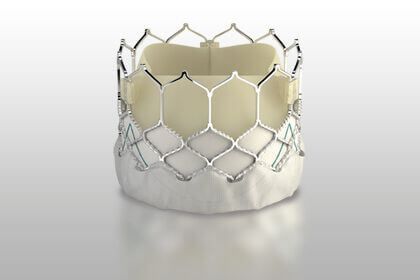
The CHOICE trial, published in 2014 in JAMA, was one of the few randomized studies comparing both valve types; its outcomes showed balloon-expandable devices as superior. However, this trial used first-generation devices that are no longer available in the market, something that renders it obsolete.
Read also: “The SOURCE 3 Confirms the Good Outcomes of the SAPIEN 3 at One Year Followup”.
This new work, recently published in JACC, compared the new self-expanding ACURATE neo (NEO) and the next-generation balloon-expandable SAPIEN 3 (S3). In order to do so, 1121 patients were enrolled; 622 were treated with S3 and 311 were treated with NEO.
In-hospital complications were comparable between NEO and S3, including stroke (1.9% vs. 2.4%; p = 0.64), major vascular complications (10.3% vs. 8.5%; p = 0.38), or life-threatening bleeding (4.2% vs. 3.7%; p = 0.72).
Device failure was also similar for both prostheses (10.9% vs. 9.6%; p = 0.71), with more paravalvular leak with NEO (moderate to more severe leak, 4.8% vs. 1.8%; p = 0.01), but lower gradient (≥20 mm Hg, 3.2% vs. 6.9%; p = 0.02) and pacemaker implantation rates (9.9% vs. 15.5%; p = 0.02).
Read also: “Lotus vs Sapien 3, different mechanisms with similar results”.
Thirty-day mortality and acute device safety rates were similar with both devices. However, a month is definitely too short a time to assess these devices given the current status of transcatheter aortic valve replacement.
Conclusion
High technical success and excellent clinical results characterized both valves. Differences found included the fact that the ACURATE neo device was associated with lower pacemaker implantation and lower elevated gradient rates, and the SAPIEN 3 device was associated with lower paravalvular leak rates.
Editorial
Both devices include skirts for the reduction of paravalvular leak. In fact, SAPIEN 3 achieved an impressive 1.8% rate of moderate to more severe leak. As a downside, these skirts interact with the left ventricular outflow tract, thus increasing the rates of pacemaker implantation.
Original title: Multicenter Comparison of Novel Self-Expanding Versus Balloon-Expandable Transcatheter Heart Valves.
Reference: Oliver Husser et al. J Am Coll Cardiol Intv 2017;10:2078-87.
Get the latest scientific articles on interventional cardiologySubscribe to our weekly newsletter
We are interested in your opinion. Please, leave your comments, thoughts, questions, etc., below. They will be most welcome.



