






The new drug-eluting stents (DES) equipped with ultra-thin struts are showing a lower risk of target lesion failure as a result of lower rates of acute myocardial infarction and similar rates of revascularization, according to this meta-analysis soon to be published in Circulation.
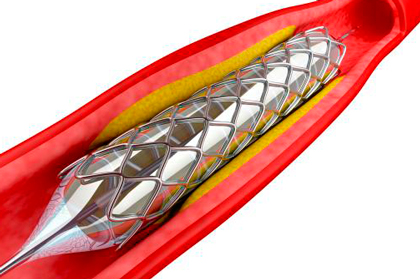 Such a difference is evidenced at a 1-year follow-up when compared with classic second-generation DES, which had reached a plateau that seemed to be hard to overcome, particularly after the frustration brought about by bioresorbable stents.
Contemporary second-generation DES showed clear superiority when compared to first-generation devices due to thinner struts and more biocompatible polymers, which reduce vascular injury and inflammation, thus promoting faster endothelialization and decreasing neointimal proliferation and thrombosis.
Read also: Treating Tricuspid and Mitral Valves with MitraClip Improves Quality of Life.
New bioresorbable-polymer or polymer-free DES were still mainly unproven, since most studies addressed their non-inferiority as regards the classic everolimus-eluting DES.
This meta-analysis included 10 randomized trials that compared new ultra-thin-strut (<70 µm) stents and second-generation DES with thicker struts in a total of 11,658 patients. Devices included the Orsiro (Biotronik), MiStent (Micell), and BioMime (Meril) stents in the thinner-strut group (from 60 to 65 µm) and, on the other hand, the Xience (Abbott), Resolute Integrity (Medtronic), and Nobori (Terumo) DES in the thicker-strut group (from 81 to 120 µm).
The primary endpoint was target lesion failure, a composite of cardiovascular death, target-vessel infarction, or ischemia-driven revascularization, which turned out to be significantly lower at 1 year for thinner-strut devices (relative risk [RR]: 0.80; 95% confidence interval [CI]: 0.65-0.99). Such a difference was mainly driven by a lower rate of target-vessel infarction with the newer stents (RR: 0.80; 95% CI: 0.65 to 0.99) and a trend towards less stent thrombosis (RR: 0.72; 95% CI: 0.51-1.01). There was no difference in ischemia-driven revascularization.
Read also: Tricuspid Regurgitation: MitraClip Improves Survival.
It is possible that thinner struts may offer less radial force than thicker struts, which means that they may not be ideal for heavily calcified lesions, ostial lesions, or total occlusions. All of these subgroups were clearly underrepresented in the clinical trials included.
Results were consistent across studies, which may suggest a class effect in favor of ultra-thin-strut DES.
Original title: Newer Generation Ultra-Thin Strut Drug-Eluting Stents Versus Older Second-Generation Thicker Strut Drug-Eluting Stents for Coronary Artery Disease: A Meta-Analysis of Randomized Trials.
Reference: Bangalore S et al. Circulation. 2018; Epub ahead of print.
Get the latest scientific articles on interventional cardiologySubscribe to our weekly newsletter
We are interested in your opinion. Please, leave your comments, thoughts, questions, etc., below. They will be most welcome.



