






Courtesy of Dr. Carlos Fava.
Bicuspid aortic valves are found in approximately 2% of patients and represent the most frequent cause of aortic stenosis in young adults requiring valve replacement.
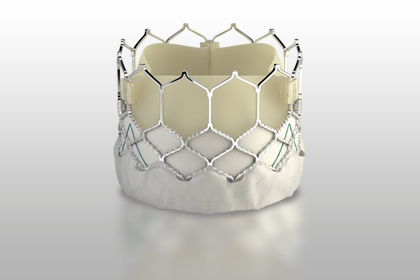
Though TAVR has advanced significantly, this entity has not yet been included in the different randomized studies. At present, we have data from different reports, but no consolidation.
The study looked at the STS/ACC Registry, which included patients receiving the percutaneous valve SAPIEN 3 between June 2015 and November de 2018.
This analyzis included 81822 patients: 2726 presented bicuspid aortic valve (3.33%); the rest were tricuspid.
Bicuspid patients were more often men, younger, with fewer comorbidities and lower STS mortality score. After Propensity Score Matching, 2691 patients were left in each group, with mean age 74, 60% men and 4.9% STS.
Read also: AHA 2019 | Sapien vs Evolut: A Head-to-Head Study Seems Mandatory.
Bicuspid patients required a larger valve, regardless implantation or procedural success. At hospital level, there were no differences in mortality, but conversion to surgery, annulus rupture and stroke were more frequent in bicuspid patients.
At 30 days, there were no differences in mortality. In addition, there were elevated risks of stroke (2.5% vs 1.6%; absolute RD,0.89% [95% CI, 0.88% – 0.9%]; HR, 1.57 [95% CI, 1.06 – 2.33]) and definite pacemaker (9.1% vs 7.5%; absolute RD, 1.65% [95% CI, 1.63%-1.66%]; HR, 1.23 [95% CI, 1.02-1.49]) in bicuspid patients.
At one year, there were no differences in mortality or stroke in both groups.
There were no differences in valve hemodynamics profile at 30 days and one year in area, gradient or moderate to severe regurgitation.
Both groups improved functional class.
Conclusion
In this registry of propensity score matched patients, those receiving transcatheter aortic valve replacement for severe aortic stenosis in bicuspid or tricuspid valves showed no differences at 30 days and one year in mortality. However, there was increased stroke in bicuspid valve patients.
Given the potential bias in patient selection and the absence of a control group, these outcomes call for further study to better determine the safety and efficacy of transcatheter aortic valve replacement in bicuspid patients.
Courtesy of Dr. Carlos Fava.
Original Title: Association Between Transcatheter Aortic Valve Replacement for Bicuspid vs Tricuspid Aortic Stenosis and Mortality or Stroke.
Reference: Raj R. Makkar, et al. JAMA. 2019;321(22):2193-2202. doi:10.1001/jama.2019.7108.
Get the latest scientific articles on interventional cardiologySubscribe to our weekly newsletter
We are interested in your opinion. Please, leave your comments, thoughts, questions, etc., below. They will be most welcome.



