






Proximal type 1 endoleaks after endovascular abdominal aortic aneurysmal repair are challenging to solve, with no existing consensus on the proper solution.
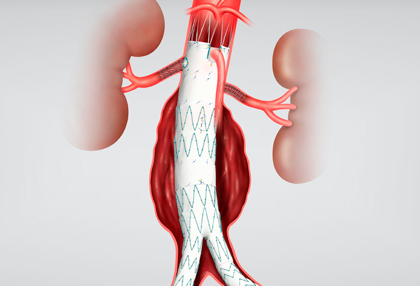
This work compared the most radical solution to the problem vs. a more conservative—though still challenging—option.
The first one was the surgical explantation of the endoprosthesis with aortic reconstruction, while the more “conservative” one was a customized fenestrated endoprosthesis.
This retrospective analysis included patients who, between 2009 and 2018, underwent one of the aforementioned two options to resolve a type 1A endoleak. Operators made the decision based on anatomy (fenestrated prosthesis eligibility), sac growth rate, and emergency or symptomatic presentation.
There were only 59 patients found who met these criteria in the almost 10 years included, but this is very useful information because of the scarcity of data and the risks of both strategies.
Read also: Data that Can Change TAVR and SAVR Strategy.
Endoprosthesis explantation and aortic reconstruction were performed in 26 patients, while implantation of a customized fenestrated endoprosthesis was conducted in 33 cases.
Both groups were similar in age and comorbidities at the time of procedure. Mean time between original endoprosthesis and new procedure was 60.4 months (34-85 months).
The maximum aneurysm diameter was greater in the surgical explantation and reconstruction group (86 mm vs. 70 mm, p = 0.008)
Secondary interventions at 30 days (11.5% vs. 9.1%) and mortality (3.8% vs. 3.3%) were similar between groups.
Read also: Revascularization Is Needed Before TAVR.
The rates of major adverse events, as defined by the Society for Vascular Surgery guidelines, were lower in the groups treated with fenestrated endoprosthesis (2.4% vs. 13.6%; p = 0.016).
After a year of follow-up, survival was similar in both groups (84% vs. 86.6%).
Conclusion
Both endoprosthesis explantation with aorta reconstruction and fenestrated endoprosthesis implantation are satisfactory solutions in high-volume and experienced centers for the treatment of type 1A leaks.
Fenestrated prosthesis has a lower initial morbidity, but its elaboration takes time, which many patients do not have. In these cases, surgery is an excellent choice.
Original Title: After EVAR by Explantation or Custom Made Fenestrated Endovascular Aortic Aneurysm Repair.
Reference: Benoit Doumenc et al. Eur J Vasc Endovasc Surg. 2021. Online ahead of print doi: 10.1016/j.ejvs.2020.10.033.
Subscribe to our weekly newsletter
Get the latest scientific articles on interventional cardiology



