






According to this recent meta-analysis of randomized studies, ultrathin strut devices are associated with lower rates of target vessel failure vs. 2nd generation drug eluting stents (DES). This advantage was driven by fewer clinically justified reinterventions.
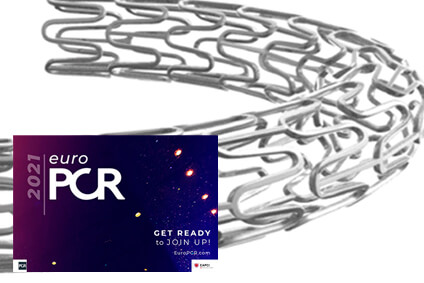
This study was published in the European Heart Journal and simultaneously presented at EuroPCR 2021 Scientific Sessions.
Ultrathin struts would conveniently reduce vessel injury, inflammation, neointimal proliferation, and thrombus formation.
A meta-analysis carried out in 2018 and published in Circulation had already shown these results, though at 12 months only. The study recently presented at EuroPCR included more randomized studies and its patients were followed up to 2.5 years.
It saw around 25% reduction in target vessel revascularization and 16% reduction in target vessel failure at 2.5 years. Thrombosis and vessel related MI showed a tendency in favor of ultrathin struts, but with no statistical significance.
To reach these conclusions, researchers looked at 16 randomized studies with over 20,000 patients in all, comparing ultrathin-strut DES to conventional 2nd-generation thin-strut DES. Ultrathin struts were defined as ≤ 70 µ, which included the Orsiro, MiStent, BioMime and SupraFlex.
Read also: EuroPCR 2021 | FUTURE II: Bioresorbable Scaffolds Reloaded.
Among the 2nd gen stents were the Xience, Resolute, Nobori, BioFreedom and Endeavor.
Compared against the latter, the ultrathin strut stents showed a relative risk of target vessel failure of 0.85 (CI 95%, 0.76 to 0.96) with similar reduction during the first year and further on. Reduction of target vessel failure was the same.
The biggest difference was in clinically driven revascularization with relative risk 0.75 (CI 95%, 0.62 to 0.92).
Read also: EuroPCR 2021 | CLASP: 2 Year Outcomes of the New Mitral Valve Repair System.
Relative risk showed only a tendency in favor of ultrathin struts in end points such as MI and stent thrombosis.
Original Title: Long-term follow-up after ultrathin vs. conventional 2nd-generation drug-eluting stents: a systematic review andmeta-analysis of randomized controlled trials.
Reference: Madhavan MV et al. Eur Heart J. 2021; Epub ahead of print y presentado simultáneamente en el EuroPCR 2021.
Subscribe to our weekly newsletter
Get the latest scientific articles on interventional cardiology



