



Provisional vs Dual Stenting in Left Main: An Endless Discussion?

True left main stem bifurcation patients have shown fewer adverse events with stepwise provisional stenting vs systematic dual stenting as first strategy, even though the difference was not significant.
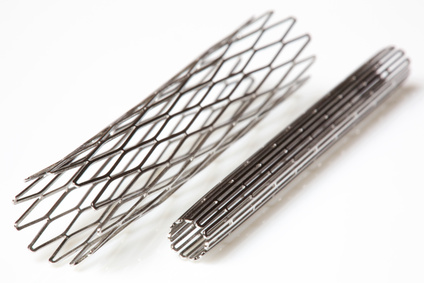
Stent provisional o doble stent en el tronco de la coronaria izquierda

Usually, for any other vessel, the preferred technique is provisional stenting. However, when it comes to the left main, there is a randomized, dedicated, well designed study that favored systematic dual stenting.

The EBC MAIN was carried out in 11 European countries including 467 true left main bifurcation patients (Medina 1.1.1 or 0.1.1). Patients were randomized to provisional stenting (n=230) or systematic dual stenting (n=237). 

Primary end point was a combination of death, MI and target vessel revascularization at 12 months and happened in 14.7% in the provisional stenting group vs 17.7% in the dual stenting group (HR 0.8, CI 95% 0.5 to 1.3; p=0.34).

Secondary end points produced the following results: death 3.0% SP vs 4.2% DS (p=0.48); MI 10% SP vs 10.1% DS (p=0.91); TV revascularization 6.1% SP vs 9.3% DS (p=0.16) and stent thrombosis 1.7% SP vs 1.3% DS (p=0.9). 

Procedural time, x-ray dose and materials were in favor of PS. 


Read also: TAVR vs Sutureless Surgical Aortic Valve Replacement in Low-Risk Patients.


Symptom improvement was excellent and identical in both groups. 

Conclusion

True left main stem bifurcation patients benefited from provisional stenting, though the difference did not reach statistical significance. The default strategy to treat the left main should continue to be provisional stenting. 

ehab283

Original Title: The European bifurcation club Left Main Coronary Stent study: a randomized comparison of stepwise provisional vs. systematic dual stenting strategies (EBC MAIN).

Reference: David Hildick-Smith et al. Eur Heart J. 2021 Oct 1;42(37):3829-3839. doi: 10.1093/eurheartj/ehab283.


Subscribe to our weekly newsletter

Get the latest scientific articles on interventional cardiology

More articles by this author

ACC 2026 | DKCRUSH VIII: IVUS or angiography to guide PCI in complex coronary bifurcations

Intracoronary imaging guidance has become an established recommended strategy in complex coronary lesions. In the specific setting of complex bifurcations, uncertainty remained regarding the...

ACC 2026 | OPTIMAL: IVUS Guidance in PCI of the Unprotected Left Main Coronary Artery

Percutaneous coronary intervention (PCI) is considered an equivalent alternative to coronary artery bypass surgery in patients with left main coronary artery (LMCA) stenosis and...

ACC 2026 | IVUS-CHIP Trial: Intravascular ultrasound–guided versus angiography-guided complex PCI

Optimization of percutaneous coronary intervention (PCI) in complex lesions remains a relevant clinical challenge. In this context, the IVUS-CHIP trial was designed to evaluate...

ACC 2026 | ALL-RISE Trial: Coronary Physiological Assessment Using FFRangio

Coronary physiological assessment using pressure-wire techniques (FFR/iFR) carries a Class IA recommendation in ACC/AHA guidelines; however, its use remains limited due to factors such...

LEAVE A REPLY

Please enter your comment!
Please enter your name here

Related Articles

SOLACI Sessionsspot_img

Recent Articles

Therapeutic strategies in carotid free-floating thrombus: evidence and controversies

Carotid free-floating thrombus (cFFT) is a rare entity with a high embolic risk, associated with acute neurological events such as stroke or transient ischemic...

The Two Sides of the Coin: What Do CHAMPION-AF and CLOSURE-AF Teach Us About Left Atrial Appendage Closure?

Letter to the editor: Juan Manuel Pérez Asorey Percutaneous left atrial appendage closure (LAAO) is currently going through one of the most interesting stages of...

CLOSURE-AF: Percutaneous Left Atrial Appendage Closure versus Medical Therapy in Atrial Fibrillation

Percutaneous left atrial appendage closure has been proposed as an alternative to anticoagulation in patients with atrial fibrillation and high bleeding risk; however, comparative...

