



Benefit of Cusp overlap method for self‐expanding transcatheter aortic valves

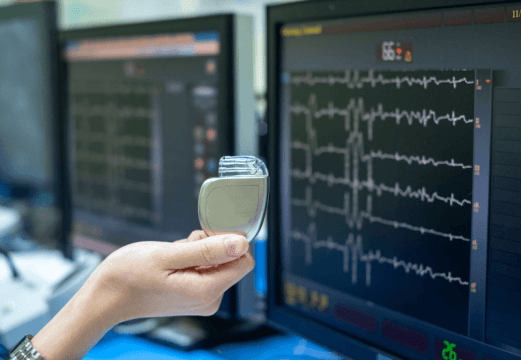
The need for permanent pacemaker implantation (PPM) continues to be one of the main challenges in TAVR, especially with self-expanding valves, with a pacemaker implantation rate that varies between 17.5% and 30% in large randomized studies, vs. 4% to 6.5% with self-expanding valves.
Beneficio del implante alto de las válvulas aórticas percutáneas autoexpandibles 

Therefore, in an attempt to prevent the need for PPM implantation, the cusp overlapping technique has been developed (COT) which several analysts have shown has a lower rate vs the conventional implantation technique also called three cusp technique (3C). However, at present, this technique still calls for robust, large randomized trials. 

This study looked at 647 patients undergoing TAVR with self-expanding EVOLUT; 519 (80.2%) with the COT technique.

Both groups were similar, with mean age 82, but surgical scores were higher in those treated with the 3C technique. 

Left ventricular function was higher in COT patients (58% vs. 53%, p<0.001), with 41 mmHg gradient and close to 2% bicuspid valves. 

Read also: Does Post-Dilation in TAVR Affect its Long-Term Outcomes?

Valve 29 was the most used (45%), followed by the 26 (35%), and 34 (12%) and, in lower numbers, the 23; the transfemoral approach was used in nearly all patients.

At 30 days, patients treated with the COT technique showed lower need for PPM implantation (10% vs. 21%, p=<0.001) and one new AV block (11% vs. 23%, p<0.001), with no difference in new intraventricular conduction block. 

Conclusion

COT presents some potential technical advantages vs. 3C, and perhaps a lower rate of PPM implantation in TAVR with self-expanding EVOLUT. 

Dr. Carlos Fava - Consejo Editorial SOLACI

Dr. Carlos Fava.
Member of the Editorial Board of SOLACI.org.

Original Title: Cusp overlap method for self‐expanding transcatheter aortic valve replacement.

Reference: Talal F. Aljabbary, et al. Catheter Cardiovasc Interv. 2024;103:202–208.


Subscribe to our weekly newsletter

Get the latest scientific articles on interventional cardiology

More articles by this author

T-TEER: Beyond Traditional Pulmonary Hypertension Thresholds

Significant tricuspid regurgitation (TR) is associated with progressive functional deterioration, heart failure (HF) hospitalizations, and increased mortality. In recent years, transcatheter tricuspid edge-to-edge repair...

Is left atrial appendage closure safe in patients with reduced ejection fraction?

Patients with heart failure with reduced ejection fraction (HFrEF) were excluded from the major randomized trials evaluating percutaneous left atrial appendage closure (LAAC), and...

Left Atrial Appendage Closure in Spain: Sustained Growth and Favorable Real-World Outcomes

Oral anticoagulation remains the standard treatment for stroke prevention in patients with atrial fibrillation. However, many patients have a high bleeding risk or contraindications...

HERA-TAVI: Intra-Annular vs Supra-Annular Valves in TAVI

 The HERA-TAVI study is an international multicenter registry that compared the clinical and hemodynamic outcomes of contemporary self-expanding transcatheter heart valves with intra-annular (IA)...

LEAVE A REPLY

Please enter your comment!
Please enter your name here

Related Articles

SOLACI Sessionsspot_img
Jornadas Guatemala 2026

Recent Articles

Plaque Ruptures in Non-Culprit Arteries: Follow-Up With Intravascular Imaging

Plaque rupture remains one of the most important pathophysiological mechanisms in acute coronary syndromes. However, not all ruptures manifest clinically as ischemia, myocardial infarction,...

Drug-Eluting Stents in Peripheral Arterial Disease: When Should They Be Used?

Peripheral drug-eluting stents have transformed the treatment of peripheral arterial disease by reducing restenosis rates and the need for repeat interventions. However, the emergence...

OCT-Detected High-Risk Plaques Predict Recurrent Events After Myocardial Infarction

After a myocardial infarction (MI), non-culprit lesions are often deferred when they are not flow-limiting (negative FFR). However, these lesions continue to represent an...

