






Left atrial appendage closure (LAAC) has undergone significant advances over the past two decades. This progress has been driven by the development of new devices, improved procedural safety, and the growing body of evidence supporting broader clinical adoption. Despite these advances, device-related thrombosis (DRT) remains a major concern because of its association with an increased risk of thromboembolic events. Several risk factors for DRT have been identified, although most are non-modifiable.
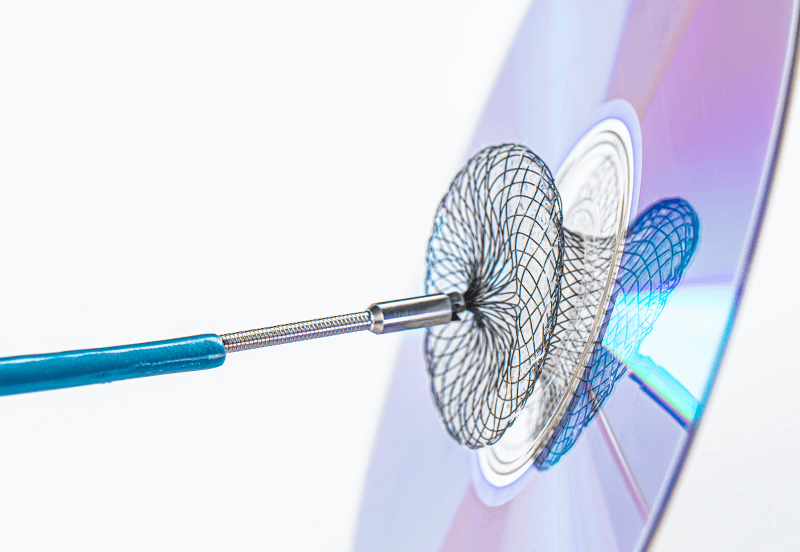
Among the few modifiable factors, deep device implantation has consistently emerged as one of the most significant predictors of DRT across multiple studies. Distal device implants leave a relevant portion of the left atrium exposed to blood stasis around the device surface, potentially promoting thrombus formation.
Recent advances in computational fluid dynamics (CFD) modeling have enabled patient-specific blood flow simulations to assess the risk of device-related thrombosis after LAAC. These simulations have provided valuable insights into the relationship between left atrial appendage anatomy, hemodynamics, and thrombus development. However, previous studies have been limited by small sample sizes, restricting the generalizability of their findings.
The aim of this study was to evaluate the impact of device implantation depth on blood flow dynamics after LAAC using CFD-based simulations and to explore its potential role in DRT risk stratification.
The Primary Endpoint (PEP) was to compare CFD-derived flow indices — device surface velocity index (DSVI), endothelial cell activation potential (ECAP), and the presence of vortices/stagnant flow — between proximal and distal implantation groups. The Secondary Endpoint (SEP) was to explore the relationship between these flow characteristics and the rate of DRT.
The study included 285 patients who underwent LAAC with Amplatzer Amulet or WATCHMAN devices across 10 centers. Patient-specific CFD simulations were performed using postprocedural computed tomography and echocardiography to assess blood flow dynamics. The mean age was 75 years, and most patients were male.
Proximal implants (57.2%) demonstrated more favorable flow patterns, including higher DSVI (0.11 m/s vs. 0.09 m/s; p = 0.002), lower ECAP (0.75 vs. 0.90; p = 0.003), and fewer recirculation zones (40.5% vs. 74.6%; p < 0.001). The incidence of DRT increased with greater implantation depth, in parallel with worsening flow indices. A CFD-based DRT risk score incorporating ECAP, implantation depth, and flow complexity showed good discriminatory capacity (ROC area under the curve [AUC] 0.81), outperforming anatomical depth alone (AUC 0.71).
Conclusion: Greater implantation depth after LAAC is associated with abnormal blood flow dynamics and a worse hemodynamic profile
The use of CFD simulations in patients undergoing LAAC demonstrated a clear relationship between deeper distal implantation and abnormal flow patterns associated with a higher risk of device-related thrombosis (DRT). These findings highlight the close relationship between altered blood flow dynamics and thrombus formation.
Título Original: Impact of device implantation depth on blood flow dynamics after left atrial appendage closure.
Referencia: Pedro Cepas-Guillén et al EuroIntervention 2026;22:e444-e454.
Suscríbase a nuestro newsletter semanal
Reciba resúmenes con los últimos artículos científicos



 ha experimentado avances significativos en las últimas dos décadas. Este progreso ha sido impulsado por el desarrollo de nuevos dispositivos, la mayor seguridad de los procedimientos y la creciente evidencia disponible, favoreciendo una adopción clínica cada vez más amplia.)