



TCT 2018 | IMPERIAL: First Study Comparing Drug-Eluting Stents in Patients with Femoropopliteal Disease

The IMPERIAL trial compared the safety and efficacy of a nitinol self-expanding polymer-free placlitaxel-eluting stent (Zilver PTX, Cook Medical, already approved by the US Food and Drug Administration [FDA]) and a nitinol self-expanding polymer-coating placlitaxel-eluting stent (Eluvia, Boston Scientific).
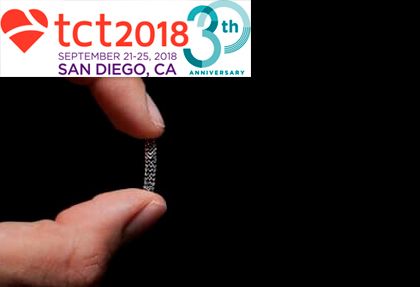
imperial-TCT 2018This was a single-blind randomized trial in patients with symptomatic intermittent claudication (Rutherford categories 2, 3, or 4) and native superficial femoral artery or proximal popliteal artery lesions.


The primary efficacy endpoint was primary vessel patency as determined by Doppler echocardiography at 12 months after the procedure. The primary safety endpoint was all-cause death, target-limb amputation, or repeat revascularization, at 12 months.


The trial included 465 patients randomized 2:1 (Eluvia n = 309 and Zilver PTX n = 156). Primary patency in the Eluvia group was 86.8% vs. 81.5% in the Zilver PTX group, thus achieving non-inferiority. The device was also non-inferior as regards safety; there were no deaths and one amputation at 13 months in the Eluvia group, and one revascularization in each group.


Read also: New Atrial Fibrillation After TAVR Indicates Prognosis.


A post hoc analysis showed that, at 9 months, patency in the Eluvia group was superior and the trend towards thrombosis was lower (about 50% less, although the comparison included few patients).


Original title: Twelve-Month Results of the IMPERIAL Randomized Trial: Comparing the Eluvia and Zilver PTX Stents for Treatment of Femoropopliteal Arteries.

Presenter: William A. Gray.


IMPERIAL-presentacion

IMPERIAL-articulo-original


Subscribe to our weekly newsletter

Get the latest scientific articles on interventional cardiology

We are interested in your opinion. Please, leave your comments, thoughts, questions, etc., below. They will be most welcome.


More articles by this author

Impact of Baseline Systolic Blood Pressure on Blood Pressure Changes Following Renal Denervation

Renal denervation (RDN) is a guideline-recommended therapy to reduce blood pressure in patients with uncontrolled hypertension, although uncertainties remain regarding which factors best predict...

Hypertriglyceridemia as Key Factor to Abdominal Aortic Aneurysm Development and Rupture: Genetic and Experimental Evidence

Abdominal aortic aneurysm (AAA) is a deadly vascular disease with no effective drug treatment, and risk of rupture reaching up to 80%. Even though...

Atrial Fibrillation and Chronic Kidney Disease: Outcomes of Different Stroke Prevention Strategies

Atrial fibrillation (AF) affects approximately 1 in every 4 patients with end-stage renal disease (ESRD). This population carries a high burden of comorbidities and...

Safety of Prophylactic Spinal Fluid Drainage in Open and Endovascular Repair of Thoracic and Thoracoabdominal Aortic Aneurysms

Spinal cord injury remains one of the most devastating complications of thoracic and thoracoabdominal aneurysm repair, mainly associated to a compromised the Adamkiewicz artery...

LEAVE A REPLY

Please enter your comment!
Please enter your name here

Related Articles

SOLACI Sessionsspot_img

Recent Articles

Coronary Perforations and Use of Covered Stents: Safe and Effective Long-Term Strategy?

Coronary perforations remain one of the most serious complications of percutaneous coronary intervention (PCI), especially in cases of Ellis ruptures type III. In these...

Is it really necessary to monitor all patients after TAVR?

Conduction disorders (CD) after transcatheter aortic valve replacement (TAVR) are a frequent complication and may lead to the need for permanent pacemaker implantation (PPI)....

Is it really necessary to monitor all patients after TAVR?

Conduction disorders (CD) after transcatheter aortic valve replacement (TAVR) are a frequent complication and may lead to the need for permanent pacemaker implantation (PPI)....
