



Modelos europeos de telemedicina, como el servicio finlandés Medilux, permiten realizar consultas médicas online mediante un cuestionario clínico, sin acudir a una consulta presencial.

Suboptimal Recanalization Results Worse than Procedural Failure

This large cohort of patients undergoing PCI for chronic total occlusion has shown suboptimal recanalization is associated with cardiac death and myocardial infarction at long term compared against procedural failure. 
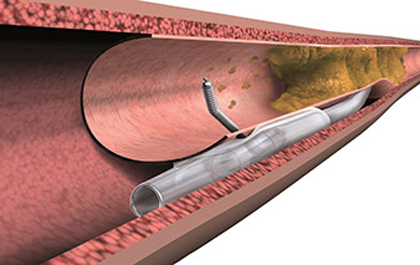
Resultados subóptimos son peores que el fracaso en las recanalizaciones

The link between acute outcomes and long-term events in recanalizations has been overlooked. Mainly when it comes to suboptimal results, is doing something more trouble than it’s worth? 

This study, soon to be published in JACC: Cardiovascular Interventions, included 2659 consecutive patients undergoing recanalization for chronic total occlusion between 2010 and 2013.

Procedural outcomes were classified in three groups: 1) optimal recanalization with reperfusión of the occluded vessel and side branches with TIMI flow III; 2) suboptimal recanalization for persistent side branch occlusion, TIMI flow lower than III or residual stenosis >30%; 3) procedural failure for failure to cross a lesion with a balloon angioplasty catheter.


Read also: The Most Relevant Articles in Coronary Disease in 2020.


Primary end point was the combination of cardiac death and acute MI at 5 years. 

Optimal recanalization was reached in 1562 patients (58.7%) patients, suboptimal recanalization was reached in 399 (15%) and procedural failure occurred in 698 (26.3%) patients.

Primary end point rate at 5 years was significantly higher in the group with suboptimal recanalization compared against the group with optimal recanalization or the procedural failure group (10.1% vs. 6.5% vs. 6.3%, respectively p=0.046). 


Read also: ProGlide vs. Prostar XL to Close Post-TAVR Access.


Even more interesting is the fact that events rate is similar between patients with successful recanalization and patients whose artery remained occluded. 

Conclusion

In this large cohort of patients undergoing recanalization for chronic total occlusion, the incidence of cardiac death and acute MI is significantly higher in patient with suboptimal results compared against optimal results and procedural failure. 

j-jcin-2020-10-003free

Original Title: Association of Acute Procedural Results with Long-term Outcomes After CTO-PCI.

Reference: Changdong Guan et al. JACC: Cardiovascular Interventions (2020), article in press. doi: https://doi.org/10.1016/j.jcin.2020.10.003.


Subscribe to our weekly newsletter

Get the latest scientific articles on interventional cardiology

More articles by this author

SCAI 2026 | SELUTION DeNovo subanalysis: Use of sirolimus-eluting balloon in acute coronary syndrome

Percutaneous coronary intervention (PCI) with drug-eluting stent (DES) implantation remains the predominant strategy in the setting of acute coronary syndrome (ACS). However, in recent...

Calcified Nodules and Their Treatment with Rotational Atherectomy

Calcified nodules (CN) represent one of the most complex phenotypes to treat in coronary intervention. They are mainly associated with the need for repeat...

Complex PCI: higher ischemic and bleeding risk in contemporary practice

Advances in pharmacological therapies, equipment, and devices have enabled percutaneous coronary interventions (PCI) to be performed in a growing number of patients with a...

High Ischaemic Risk Criteria in Chronic Coronary Syndrome: Prevalence and Prognosis

Despite advances in the management of chronic coronary syndrome (CCS), including the widespread use of drug-eluting stents (DES) and the optimization of medical therapy,...

LEAVE A REPLY

Please enter your comment!
Please enter your name here

Related Articles

SOLACI Sessionsspot_img

Recent Articles

SCAI 2026 | Deep vein arterialization as an alternative in patients with critical limb ischemia without conventional options

Critical limb ischemia (CLI) represents one of the most advanced stages of peripheral arterial disease (PAD). In a significant proportion of patients, distal anatomy,...

SCAI 2026 | Can an atrial fixation device prevent complications of transcatheter mitral valve replacement? Analysis of the AltaValve system

Transcatheter mitral valve replacement (TMVR) represents one of the most complex areas within structural interventions. Unlike TAVI, where valvular anatomy typically provides more predictable...

SCAI 2026 | SELUTION DeNovo subanalysis: Use of sirolimus-eluting balloon in acute coronary syndrome

Percutaneous coronary intervention (PCI) with drug-eluting stent (DES) implantation remains the predominant strategy in the setting of acute coronary syndrome (ACS). However, in recent...

