






This large cohort of patients undergoing PCI for chronic total occlusion has shown suboptimal recanalization is associated with cardiac death and myocardial infarction at long term compared against procedural failure.
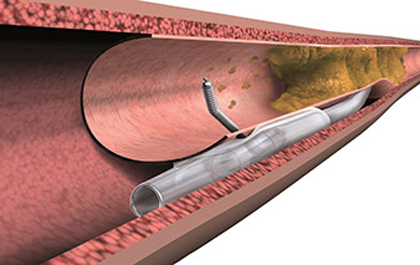
The link between acute outcomes and long-term events in recanalizations has been overlooked. Mainly when it comes to suboptimal results, is doing something more trouble than it’s worth?
This study, soon to be published in JACC: Cardiovascular Interventions, included 2659 consecutive patients undergoing recanalization for chronic total occlusion between 2010 and 2013.
Procedural outcomes were classified in three groups: 1) optimal recanalization with reperfusión of the occluded vessel and side branches with TIMI flow III; 2) suboptimal recanalization for persistent side branch occlusion, TIMI flow lower than III or residual stenosis >30%; 3) procedural failure for failure to cross a lesion with a balloon angioplasty catheter.
Read also: The Most Relevant Articles in Coronary Disease in 2020.
Primary end point was the combination of cardiac death and acute MI at 5 years.
Optimal recanalization was reached in 1562 patients (58.7%) patients, suboptimal recanalization was reached in 399 (15%) and procedural failure occurred in 698 (26.3%) patients.
Primary end point rate at 5 years was significantly higher in the group with suboptimal recanalization compared against the group with optimal recanalization or the procedural failure group (10.1% vs. 6.5% vs. 6.3%, respectively p=0.046).
Read also: ProGlide vs. Prostar XL to Close Post-TAVR Access.
Even more interesting is the fact that events rate is similar between patients with successful recanalization and patients whose artery remained occluded.
Conclusion
In this large cohort of patients undergoing recanalization for chronic total occlusion, the incidence of cardiac death and acute MI is significantly higher in patient with suboptimal results compared against optimal results and procedural failure.
Original Title: Association of Acute Procedural Results with Long-term Outcomes After CTO-PCI.
Reference: Changdong Guan et al. JACC: Cardiovascular Interventions (2020), article in press. doi: https://doi.org/10.1016/j.jcin.2020.10.003.
Subscribe to our weekly newsletter
Get the latest scientific articles on interventional cardiology



