



EuroPCR 2018 | 2nd and 3rd-Generation DES for Bifurcation Lesions: Nothing New Under the Sun

This study aimed to assess the outcome of Culotte stenting with newer-generation drug-eluting stents (DES) in Medina 1, 1, 1 bifurcation lesions. The 2nd-generation device used was permanent-polymer everolimus-eluting stent Xience, a device for which there is comparatively plenty of evidence available. Alternatively, the 3rd-generation stent used was thin-strut abluminal bioresorbable-polymer everolimus-eluting stent SYNERGY.
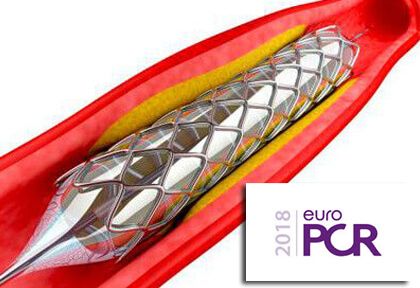
DES de 2° vs 3° generación en bifurcaciones: nada nuevo bajo el solPatients with Medina 1, 1, 1 bifurcation lesions eligible for Culotte stenting, 170 total patients, were randomized 1:1 to Xience or Synergy stents.


The rate of combined events (death, acute myocardial infarction, stroke, target-vessel failure, stent thrombosis, or binary restenosis) occurred in 19% of the Xience group vs. 16% of patients in the Synergy group, which means that the latter reached the non-inferiority criterion.


Original title: Culotte Stenting for Coronary Bifurcation Lesions with 2nd and 3rd-Generation Everolimus-Eluting Stents: The CELTIC Bifurcation Study.

Presenter: David P. Foley.


Subscribe to our weekly newsletter

Get the latest scientific articles on interventional cardiology

We are interested in your opinion. Please, leave your comments, thoughts, questions, etc., below. They will be most welcome.


More articles by this author

ACC 2026 | DKCRUSH VIII: IVUS or angiography to guide PCI in complex coronary bifurcations

Intracoronary imaging guidance has become an established recommended strategy in complex coronary lesions. In the specific setting of complex bifurcations, uncertainty remained regarding the...

ACC 2026 | OPTIMAL: IVUS Guidance in PCI of the Unprotected Left Main Coronary Artery

Percutaneous coronary intervention (PCI) is considered an equivalent alternative to coronary artery bypass surgery in patients with left main coronary artery (LMCA) stenosis and...

ACC 2026 | IVUS-CHIP Trial: Intravascular ultrasound–guided versus angiography-guided complex PCI

Optimization of percutaneous coronary intervention (PCI) in complex lesions remains a relevant clinical challenge. In this context, the IVUS-CHIP trial was designed to evaluate...

ACC 2026 | ALL-RISE Trial: Coronary Physiological Assessment Using FFRangio

Coronary physiological assessment using pressure-wire techniques (FFR/iFR) carries a Class IA recommendation in ACC/AHA guidelines; however, its use remains limited due to factors such...

LEAVE A REPLY

Please enter your comment!
Please enter your name here

Related Articles

SOLACI Sessionsspot_img

Recent Articles

Management of Valve Thrombosis in TAVI: Current Evidence-Based Approach

The expansion of transcatheter aortic valve implantation (TAVI) into younger and lower-risk populations has brought bioprosthetic valve thrombosis to the forefront as a clinically...

Experience with the intra-annular self-expanding Navitor valve: data from the STS/ACC TVT registry

The expansion of TAVI, with the introduction of new-generation devices, has prioritized not only periprocedural safety, but also the preservation of coronary access, more...

Therapeutic strategies in carotid free-floating thrombus: evidence and controversies

Carotid free-floating thrombus (cFFT) is a rare entity with a high embolic risk, associated with acute neurological events such as stroke or transient ischemic...
