






After rechanneling occluded superficial femoro-popliteal arteries, interventional physicians are left with the question of how to proceed with infrapopliteal disease. This work (soon to be published in Eur J Vasc Endovasc Surg) shows us the importance of achieving patency in tibial arteries so as to obtain better mid-term outcomes.
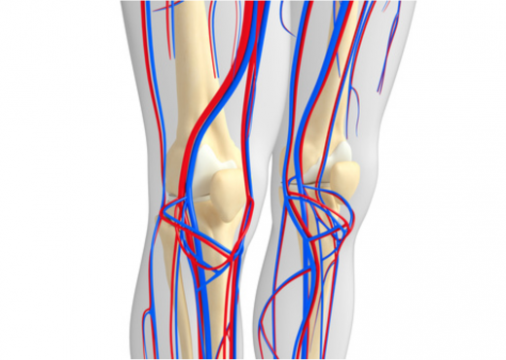 The gist is that, after an effort to rechannel a long, calcified chronic total occlusion in the superficial femoral artery, we must take a deep breath and make the same effort for the tibial arteries; otherwise, the job will be simply half way through.
This study included a total of 238 lower limbs in 199 patients with de novo superficial femoral artery chronic total occlusions treated with conventional nitinol stents between 2009 and 2015. These lower limbs were divided into 2 groups, group A (number of patent tibial arteries at baseline angiogram ≥2, 127 limbs in 104 patients) vs. group B (number of patent tibial arteries at baseline angiogram ≤1, 111 limbs in 95 patients).
Read also: Can We Discontinue Betablockers after AMI?
The additional efficacy of tibial artery patency after rechanneling the superficial femoral artery was evaluated by comparing B group subgroups (group B with patent tibial artery vs. without patent tibial artery). The primary endpoint was freedom from major events in the treated limb at 2 years, defined as a composite of repeat revascularisation and amputation.
Group A had a significantly higher event-free survival rate at 2 years compared with group B (80.9% vs. 43.5%; p < 0.001). This difference was mainly driven by the revascularization rate.
In the B group subgroup analysis, patients with tibial artery rechanneling (besides femoral artery rechanneling) had significantly higher event-free survival rates compared with patients who only underwent femoral artery rechanneling (65.5% vs. 26.2%; p = 0.001).
Conclusion
The presence of patent tibial arteries was an important predictor of events after the rechanneling of femoral arteries. Additional tibial artery angioplasty after femoral artery rechanneling is fundamental for the improvement of clinical outcomes.
Original title: The Importance of Patency of Tibial Run Off Arteries on Clinical Outcomes After Stenting for Chronic Total Occlusions in the Superficial Femoro-Popliteal Artery.
Reference: Yusuke Watanabe et al. Eur J Vasc Endovasc Surg (2018). Article in press.
Get the latest scientific articles on interventional cardiologySubscribe to our weekly newsletter
We are interested in your opinion. Please, leave your comments, thoughts, questions, etc., below. They will be most welcome.



