



CHOICE-CLOSURE | Which Closure Device for TAVR is Better?

In patients who undergo transcatheter aortic valve replacement (TAVR) through transfemoral access, a closure device based on plug technology (MANTA VCD) is associated with a higher chance of access-related complications, but with shorter hemostasis time compared with a device with suture technology such as ProGlide VCD.
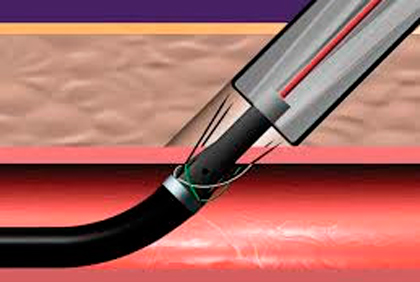
¿Cuál es el mejor tipo de dispositivo de cierre para el acceso del TAVI?

Nowadays, most patients undergo TAVR through transfemoral access. Percutaneous closure of the access bears multiple advantages for both patient and operator. However, there are several designs in the market, and it remains unclear which one is the most effective.

CHOICE-CLOSURE was a multicenter study in which patients scheduled for TAVR through femoral access were randomized to a device based on plug technology (Manta) vs. a device based on suture technology (ProGlide).

The protocol did not allow for an extra device when using Manta. In the case of ProGlide, two devices were used (at hours 10 and 14, respectively) and, if necessary, a small plug to help both PloGlide could be used (for example, AngioSeal).

The primary endpoint was major and minor access-related complications during the index hospitalization. The secondary endpoints included access-related bleeding, device failure to achieve hemostasis, and time to hemostasis.

About 516 patients were included and randomized, with a mean STS score of 4.1 ± 2.9% and 7.6% of associated peripheral vascular disease.


Read also: Suture-Based Percutaneous Closure vs. Plug for Large Arteriotomies.


The primary endpoint was reached in 19.4% of the population treated with Manta, and in 12% of those who received ProGlide (p = 0.029). Bleeding rates were better with ProGlide, while device efficacy was similar between both.

In terms of time to hemostasis, Manta was 3x faster (80 vs. 240 sec.; p < 0.001).

Conclusion

In patients who underwent transfemoral TAVR, the Manta device was linked to more vascular complications but reached hemostasis faster than two ProGlide. The time difference in relative terms seems a lot, but in absolute numbers it was barely over two minutes.

CIRCULATIONAHA-121-057856

Original Title: Comparison of a Pure Plug-Based versus a Primary Suture-Based Vascular Closure Device Strategy for Transfemoral Transcatheter Aortic Valve Replacement: The CHOICE-CLOSURE Randomized Clinical Trial.

Reference: Mohamed Abdel-Wahab et al. Circulation. 2021 Nov 5. doi: 10.1161/CIRCULATIONAHA.121.057856. Online ahead of print.


Subscribe to our weekly newsletter

Get the latest scientific articles on interventional cardiology

More articles by this author

The Two Sides of the Coin: What Do CHAMPION-AF and CLOSURE-AF Teach Us About Left Atrial Appendage Closure?

Letter to the editor: Juan Manuel Pérez Asorey Percutaneous left atrial appendage closure (LAAO) is currently going through one of the most interesting stages of...

CLOSURE-AF: Percutaneous Left Atrial Appendage Closure versus Medical Therapy in Atrial Fibrillation

Percutaneous left atrial appendage closure has been proposed as an alternative to anticoagulation in patients with atrial fibrillation and high bleeding risk; however, comparative...

CLOSURE-AF: Percutaneous Left Atrial Appendage Closure versus Medical Therapy in Atrial Fibrillation

Percutaneous left atrial appendage closure has been proposed as an alternative to anticoagulation in patients with atrial fibrillation and high bleeding risk; however, comparative...

ACC 2026 | Extended follow-up of the TRI-FR study: Edge-to-edge percutaneous repair in isolated severe tricuspid regurgitation

Severe tricuspid regurgitation (TR) is associated with chronic systemic venous congestion, recurrent hospitalizations for heart failure (HF), and a significant deterioration in quality of...

LEAVE A REPLY

Please enter your comment!
Please enter your name here

Related Articles

SOLACI Sessionsspot_img

Recent Articles

Therapeutic strategies in carotid free-floating thrombus: evidence and controversies

Carotid free-floating thrombus (cFFT) is a rare entity with a high embolic risk, associated with acute neurological events such as stroke or transient ischemic...

The Two Sides of the Coin: What Do CHAMPION-AF and CLOSURE-AF Teach Us About Left Atrial Appendage Closure?

Letter to the editor: Juan Manuel Pérez Asorey Percutaneous left atrial appendage closure (LAAO) is currently going through one of the most interesting stages of...

CLOSURE-AF: Percutaneous Left Atrial Appendage Closure versus Medical Therapy in Atrial Fibrillation

Percutaneous left atrial appendage closure has been proposed as an alternative to anticoagulation in patients with atrial fibrillation and high bleeding risk; however, comparative...

