



The FDA Approves Sapien 3 with Alterra in Pulmonary Position

The US Food and Drug Administration (FDA) has cleared the SAPIEN 3 valve with the Alterra adaptive pre-stent for implantation in pulmonary position. 
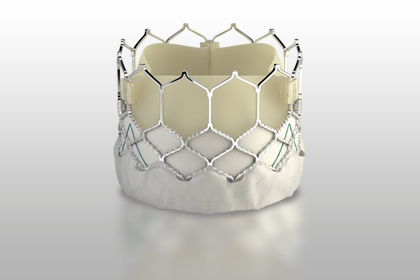
La FDA aprueba la Sapien 3 Alterra en posición pulmonar

According to Edwards Lifesciences, this new system developed for pulmonary valve is capable of compensating a wide variety of sizes and morphologies of the right ventricular outflow tract, allowing for stable valve implantation.

Patients with congenital heart disease who have already undergone multiple corrective cardiac surgeries during their lifetime are pleased with the approval of this new tool.

For these patients, Alterra is one more opportunity with a much less invasive procedure.

The FDA approved the device for the management of children or adults with severe pulmonary insufficiency shown in an echocardiogram who have a native or surgically repaired outflow tract and an indication for pulmonary valve replacement.

Earlier this year, the same regulatory body approved the Harmony device, a catheter-based pulmonary valve produced by Medtronic

Harmony was the first nonsurgical valve approved to treat pulmonary insufficiency in pediatric or adult patients with native or repaired outflow tracts.

The catheter-based valve competition is booming (for all four valves), and there are still many devices with potential advantages going through the approval process.


Read also: Women Present Lower Risk of Sport Related Sudden Death Compared to Men.


We will undoubtedly have many similar news in the next months that will widen our range of possibilities for better treatments. 

Original title: Edwards LifeSciences. Edwards receives FDA approval for SAPIEN 3 with Alterra prestent for transcatheter pulmonic valve replacement.

Reference: Publicado por la FDA el 20 de diciembre 2021.


Subscribe to our weekly newsletter

Get the latest scientific articles on interventional cardiology

More articles by this author

Management of Valve Thrombosis in TAVI: Current Evidence-Based Approach

The expansion of transcatheter aortic valve implantation (TAVI) into younger and lower-risk populations has brought bioprosthetic valve thrombosis to the forefront as a clinically...

Experience with the intra-annular self-expanding Navitor valve: data from the STS/ACC TVT registry

The expansion of TAVI, with the introduction of new-generation devices, has prioritized not only periprocedural safety, but also the preservation of coronary access, more...

The Two Sides of the Coin: What Do CHAMPION-AF and CLOSURE-AF Teach Us About Left Atrial Appendage Closure?

Letter to the editor: Juan Manuel Pérez Asorey Percutaneous left atrial appendage closure (LAAO) is currently going through one of the most interesting stages of...

CLOSURE-AF: Percutaneous Left Atrial Appendage Closure versus Medical Therapy in Atrial Fibrillation

Percutaneous left atrial appendage closure has been proposed as an alternative to anticoagulation in patients with atrial fibrillation and high bleeding risk; however, comparative...

LEAVE A REPLY

Please enter your comment!
Please enter your name here

Related Articles

SOLACI Sessionsspot_img

Recent Articles

Mechanical thrombectomy versus anticoagulation in intermediate-risk pulmonary embolism: systematic review and meta-analysis

Intermediate-risk pulmonary embolism (PE) has anticoagulation as the standard treatment, while reperfusion strategies remain a matter of debate. In this context, mechanical thrombectomy has...

High Ischaemic Risk Criteria in Chronic Coronary Syndrome: Prevalence and Prognosis

Despite advances in the management of chronic coronary syndrome (CCS), including the widespread use of drug-eluting stents (DES) and the optimization of medical therapy,...

Management of Valve Thrombosis in TAVI: Current Evidence-Based Approach

The expansion of transcatheter aortic valve implantation (TAVI) into younger and lower-risk populations has brought bioprosthetic valve thrombosis to the forefront as a clinically...

