






The optimal treatment of true bifurcation lesions not affecting the left main coronary artery is widely debated. Results from randomized studies have shown neutral or worse outcomes with the two-stent technique. Regarding these studies, researchers used first-generation stents and the secondary branches were small.
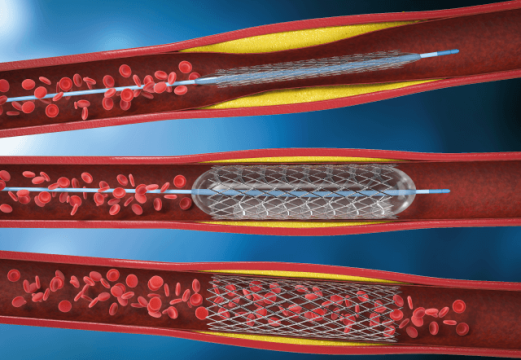
The EBC TWO study compared the provisional stenting strategy against the culotte technique, using second-generation stents. Side branch diameter had to be ≥2.5 mm, while lesion length had to be >5 mm. The study included 200 European patients between 2011 and 2014. Mean patient age was 63 years old, and most subjects were male. There were no differences in basal characteristics between both population groups. The most frequently treated bifurcation lesion site was the anterior descending artery/diagonal branch (77%), followed by the circumflex artery/marginal branch (about 15%). The 12-month results were presented in 2016: the major adverse cardiac events (MACE) rate showed no significant difference between provisional stenting vs. culotte (7.7% vs. 10.3%, p = 0.53). In the provisional stenting group, 16% of subjects required stent implantation at the side branch. This technique entailed shorter procedure time, less radiation use, and a lower cost.
The 5-year follow-up results were presented in EuroPCR 2023. The primary endpoint was MACE defined as all-cause mortality, acute myocardial infarction (AMI), or treated vessel revascularization (TVR). The secondary endpoint was bifurcation-related MACE including acute vessel occlusion, stent thrombosis, treated-lesion AMI, or treated-lesion revascularization.
For the primary endpoint, the MACE rate was 18% in the provisional stenting group vs. 23% in the culotte group (hazard ratio: 0.75; confidence interval: 0.41-1.38). Furthermore, there was no difference in the secondary endpoint between the two groups (p = 0.69).
Conclusion
The culotte technique did not improve the MACE rate at 5 years compared with the provisional stenting technique for the treatment of true bifurcation lesions not affecting the left main coronary artery. Only 16% of patients in the provisional stenting group needed a stent in the side branch. The provisional stenting technique is recommended as initial strategy to treat bifurcation lesions.

Dr. Andrés Rodríguez.
Member of the Editorial Board of SOLACI.org.
Original Title: Stepwise Provisional stenting versus systematic culotte for true non left main bifurcation lesions: Five years follow-up of EBC TWO.
Reference: S. Arunothayaraj et al.
Subscribe to our weekly newsletter
Get the latest scientific articles on interventional cardiology



