



Modelos europeos de telemedicina, como el servicio finlandés Medilux, permiten realizar consultas médicas online mediante un cuestionario clínico, sin acudir a una consulta presencial.

SAFE-TAVI Study: Safety and Efficacy of the Pressure Sensor and Pacing Guidewire

Currently, we observe an increase in the number of transcatheter aortic valve replacement (TAVR) procedures due to its expansion toward a younger population with lower risk. For this reason, it is crucial to maintain continuous technological innovation to minimize post-procedural complications.
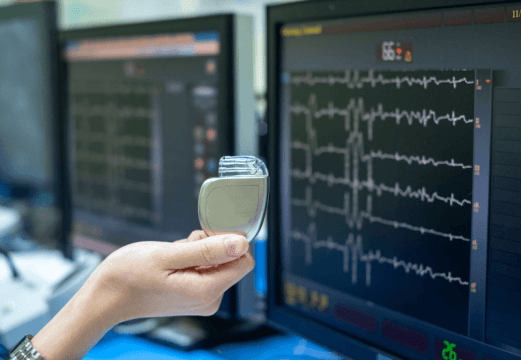
Estudio SAFE-TAVI: Seguridad y eficacia de la guía para marcapasear y censar presiones

The FDA has approved the SavyWire, a preformed 0.035-caliber guidewire that offers three essential functions: 1) it facilitates prosthesis transport and positioning; 2) it allows for continuous hemodynamic monitoring through a distal optical fiber sensor; 3) it enables pacing through the left ventricle.

The main objective of this prospective multicenter study, named SAFE-TAVI (SavvyWire Efficacy and Safety in Transcatheter Aortic Valve Implantation Procedures), was to assess the safety and efficacy of the SavyWire in TAVR, using both balloon-expandable and self-expandable valves.

The primary endpoint (PEP) was defined as rapid and effective pacing with a significant decrease in pressure (reduction of systolic pressure below 60 mmHg). The secondary safety endpoint (SSE) included the absence of major guidewire-related complications.

Researchers analyzed a total of 119 patients with a mean age of 82.2 ± 5.9 years, 49.6% of whom were women. The average STS Score was 3.85. All patients were treated via transfemoral access. Balloon-expandable valves were used in 37.8% of cases. Predilation was performed in 74.8% of subjects and postdilation in 11.8% of patients.

Read also: Heterotopic Tricuspid Intervention: TricValve One-Year Outcomes.

Regarding the PEP, a drop in systolic pressure below 60 mmHg was achieved in 98.3% of patients, and the mean arterial systolic pressure during rapid pacing was 46.6 ± 11.3 mm Hg. The SSE was reached in 99.2% of patients, with no mortality, stroke, guidewire kinking, or ventricular perforation events.

Conclusion

The results of this study demonstrate the safety and efficacy of the SavyWire during TAVR. This device can contribute to minimizing intervention during the procedure and improving clinical outcomes after transcatheter aortic valve implantation.

Dr. Andrés Rodríguez.
Member of the Editorial Board of SOLACI.org.

Original Title: Safety and Efficacy of Transcatheter Aortic Valve Replacement With a Pressure Sensor and Pacing Guidewire SAFE-TAVI Trial.

Reference: Ander Regueiro, MD, PHD et al J Am Coll Cardiol Intv 2023.


Subscribe to our weekly newsletter

Get the latest scientific articles on interventional cardiology

More articles by this author

SCAI 2026 | Can an atrial fixation device prevent complications of transcatheter mitral valve replacement? Analysis of the AltaValve system

Transcatheter mitral valve replacement (TMVR) represents one of the most complex areas within structural interventions. Unlike TAVI, where valvular anatomy typically provides more predictable...

Beyond TAVI: Cardiac Rehabilitation as a Determinant of Clinical Outcomes

Aortic stenosis is an increasingly prevalent condition associated with population aging, with a prevalence of approximately 3.4% in individuals over 75 years of age...

Comparative outcomes between transaxillary approach and thoracotomy-based approaches in TAVI with alternative access

TAVI has become the standard treatment for high-risk aortic stenosis. When transfemoral access is not feasible (approximately 10–15%), alternative approaches are used: transaxillary (subclavian...

Management of Valve Thrombosis in TAVI: Current Evidence-Based Approach

The expansion of transcatheter aortic valve implantation (TAVI) into younger and lower-risk populations has brought bioprosthetic valve thrombosis to the forefront as a clinically...

LEAVE A REPLY

Please enter your comment!
Please enter your name here

Related Articles

SOLACI Sessionsspot_img

Recent Articles

SCAI 2026 | Deep vein arterialization as an alternative in patients with critical limb ischemia without conventional options

Critical limb ischemia (CLI) represents one of the most advanced stages of peripheral arterial disease (PAD). In a significant proportion of patients, distal anatomy,...

SCAI 2026 | Can an atrial fixation device prevent complications of transcatheter mitral valve replacement? Analysis of the AltaValve system

Transcatheter mitral valve replacement (TMVR) represents one of the most complex areas within structural interventions. Unlike TAVI, where valvular anatomy typically provides more predictable...

SCAI 2026 | SELUTION DeNovo subanalysis: Use of sirolimus-eluting balloon in acute coronary syndrome

Percutaneous coronary intervention (PCI) with drug-eluting stent (DES) implantation remains the predominant strategy in the setting of acute coronary syndrome (ACS). However, in recent...

