



PCI Evolution in Infiltrative Diseases

Infiltrative diseases (ID) consist of a heterogeneous series of genetic conditions that cause infiltration and extracellular deposits which alter the diverse systems and organs affected.   
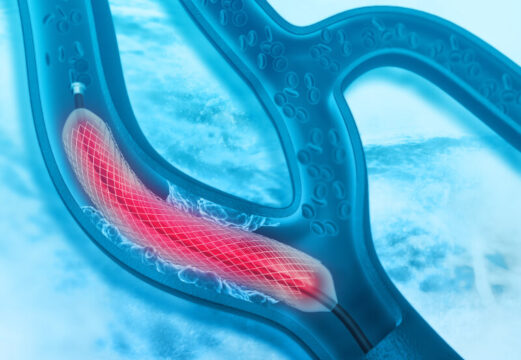
ATC en enfermedades infiltrativas

Amyloidosis, sarcoidosis and hemochromatosis affect the heart, altering the myocardium and the conduction system. 

PCI is often used at present to treat heart disease, and some of these patients present ID. Different analysis suggest that PCI might evolve differently vs. patients with no ID; however, it has not yet been thoroughly looked into. 

There was a retrospective analysis, from January 2016 to December 2020, including 2,360,860 patients; 7,855 (0.77%) with ID (amyloidosis 990, sarcoidosis 5,260 and hemochromatosis 1,625).

Read also: TAVR in Low Risk Patients: 10 Year Evolution.

Primary end point was the post-PCI combination of inhospital death, stroke and major bleeding. 

Patients with amyloidosis were older and had more comorbidities vs. sarcoidosis and hemochromatosis patients. 

Primary end point resulted more frequent in amyloidosis patients (1.6% vs. 1.1% vs. 1.18%, OR 1.6; CI del 95%, 1.1-2.44; P= .02 for amyloidosis, sarcoidosis and hemochromatosis, respectively); they also showed higher mortality (1.9% vs. 1.09% vs. 0.72%, P<0.05), and stroke (4% vs. 0% vs. 2.28%, P<0.05), but there were no significant differences in major bleeding (2.2% vs. 0.96% vs. 1.03%, p>0.05).

Read also: Sub-Analysis of the REVIVED-BCIS2: Myocardial Viability Changes Prognosis in Ischemic Cardiomyopathy Revascularization?

The cost of hospitalization and hospital stay was higher in patients with amyloidosis. 

Conclusion

Amyloidosis was associated with worse evolution after PCI, including higher inhospital mortality, intra and post procedural stroke, and socioeconomic cost. We highlight the need for a multidisciplinary approach for better assessment and further research, to better guide the screening and management strategy of these patients. 

Dr. Carlos Fava - Consejo Editorial SOLACI

Dr. Carlos Fava.
Member of the Editorial Board of SOLACI.org.

Original Title: Clinical Outcomes of Percutaneous Coronary Intervention in Amyloidosis, Sarcoidosis, and Hemochromatosis.

Reference: Bilal Hussain, et al. JSCAIhttps://doi.org/10.1016/j.jscai.2023.101267. Article in press.


Subscribe to our weekly newsletter

Get the latest scientific articles on interventional cardiology

More articles by this author

ACC 2026 | DKCRUSH VIII: IVUS or angiography to guide PCI in complex coronary bifurcations

Intracoronary imaging guidance has become an established recommended strategy in complex coronary lesions. In the specific setting of complex bifurcations, uncertainty remained regarding the...

ACC 2026 | OPTIMAL: IVUS Guidance in PCI of the Unprotected Left Main Coronary Artery

Percutaneous coronary intervention (PCI) is considered an equivalent alternative to coronary artery bypass surgery in patients with left main coronary artery (LMCA) stenosis and...

ACC 2026 | IVUS-CHIP Trial: Intravascular ultrasound–guided versus angiography-guided complex PCI

Optimization of percutaneous coronary intervention (PCI) in complex lesions remains a relevant clinical challenge. In this context, the IVUS-CHIP trial was designed to evaluate...

ACC 2026 | ALL-RISE Trial: Coronary Physiological Assessment Using FFRangio

Coronary physiological assessment using pressure-wire techniques (FFR/iFR) carries a Class IA recommendation in ACC/AHA guidelines; however, its use remains limited due to factors such...

LEAVE A REPLY

Please enter your comment!
Please enter your name here

Related Articles

SOLACI Sessionsspot_img

Recent Articles

Therapeutic strategies in carotid free-floating thrombus: evidence and controversies

Carotid free-floating thrombus (cFFT) is a rare entity with a high embolic risk, associated with acute neurological events such as stroke or transient ischemic...

The Two Sides of the Coin: What Do CHAMPION-AF and CLOSURE-AF Teach Us About Left Atrial Appendage Closure?

Letter to the editor: Juan Manuel Pérez Asorey Percutaneous left atrial appendage closure (LAAO) is currently going through one of the most interesting stages of...

CLOSURE-AF: Percutaneous Left Atrial Appendage Closure versus Medical Therapy in Atrial Fibrillation

Percutaneous left atrial appendage closure has been proposed as an alternative to anticoagulation in patients with atrial fibrillation and high bleeding risk; however, comparative...

